Compensation reviewsCompensation strategy
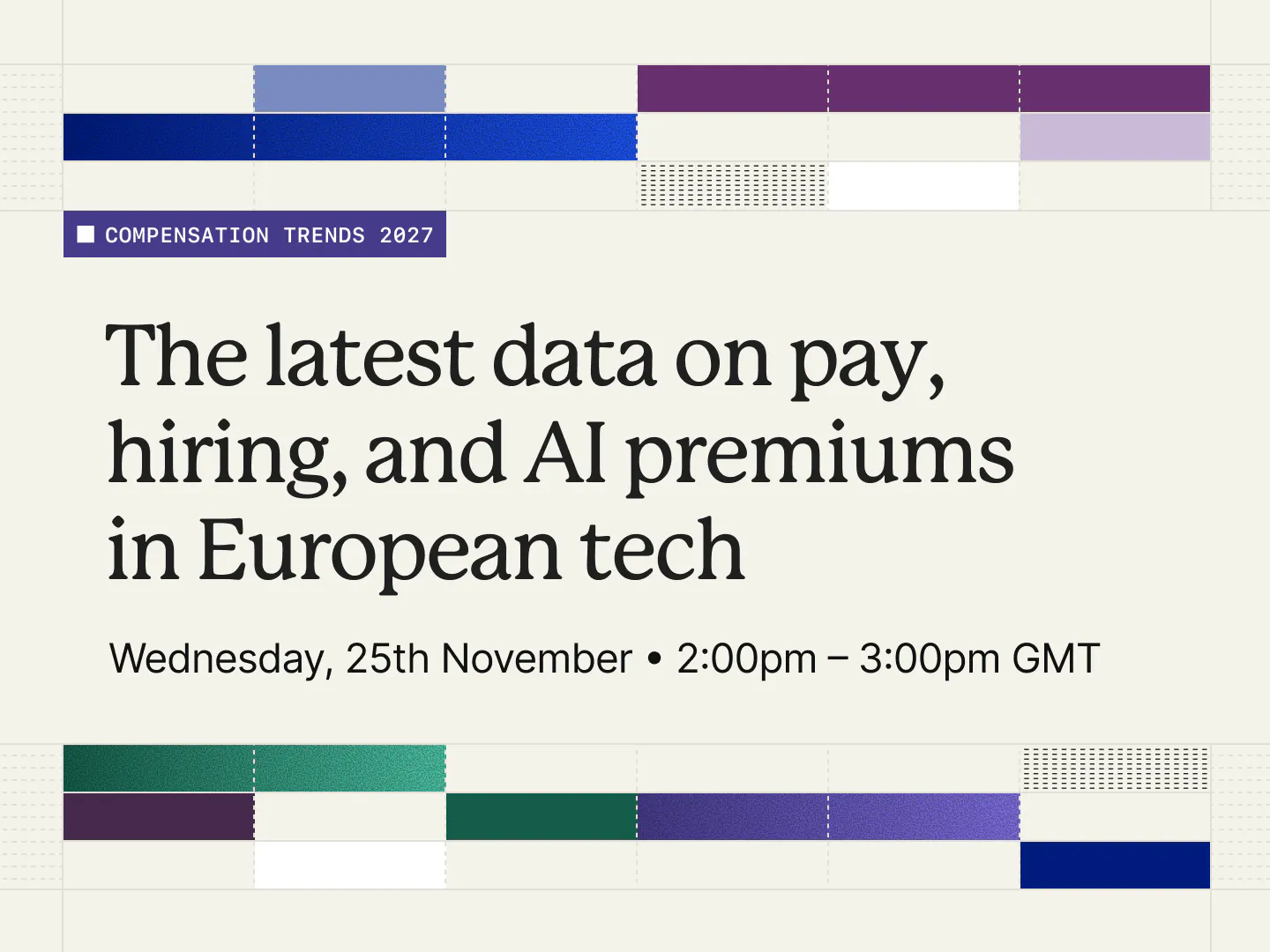
Webinar: The latest data on pay, hiring, and AI premiums in European tech
Join us for the launch of our Comp Trends 2027 report, fresh off the data.


Paying employees competitively is only one part of the equation.
People and Rewards teams also need to determine whether compensation decisions are being applied consistently across their organisation and if employees doing comparable work are being paid fairly.
The best compensation analysis software brings together internal employee pay data and external market benchmarks to help you:
In this guide, we’ll compare the best compensation analysis tools, who each is well suited for, and the questions to ask when choosing the right platform for your organisation.
Compensation analysis software helps organisations determine whether their employee pay is competitive, consistent, and fair by analysing pay from two perspectives:
In doing so, the software helps you answer 3 key questions:
Without analysing both internal and external compensation data, organisations can understand either market competitiveness or internal fairness – but not both.
Note: While different types of compensation tools may sometimes be used interchangeably, there are fundamentally differences:
→ Compensation benchmarking tools are data-driven platforms that provide market benchmark data for comparable roles, levels, and locations, helping you understand what the market pays and whether your employee pay is competitive.
→ Compensation planning tools help you design, manage, and execute your compensation strategy with workflows for salary bands, pay reviews, budgeting, pay equity, and broader compensation decisions.
→ Compensation analysis tools combine internal employee pay with external market benchmarks to determine whether employee pay is competitive, compensation decisions are consistent, and employees doing comparable work are being paid fairly.
Most of the compensation analysis platforms below combine salary benchmarking with internal compensation analysis.
Where they differ is in the quality and freshness of their market benchmarks, how they approach job levelling, and how deeply each platform supports salary bands, pay equity, and broader compensation decisions.
Here’s how the leading compensation analysis tools compare:
Ravio connects to your HRIS to compare your internal employee pay against continuously updated market benchmarks for comparable roles, helping you identify where your compensation isn’t aligned with the market or your internal pay strategy.
Who is Ravio ideal for: High-growth tech and tech-enabled companies looking to combine reliable market benchmarks with internal compensation analysis in a single platform.
How Ravio helps you with compensation analysis:
Ravio connects with your HR system to pull internal pay data and match it against reliable external benchmarks for equivalent roles, levels, and locations.
During onboarding, a team of data experts maps your job roles and levels to its standard job architecture, so you’re always accurately benchmarking your pay against comparable pay data.
The platform also lets you create and automatically maintain salary bands as you add new roles, levels, functions, locations, and as market pay changes.
In terms of internal compensation analysis, Ravio lets you compare employee pay against your salary bands and target market position.
It also helps you instantly identify employees who sit above or below their pay range and analyse pay positioning by gender to spot outliers and investigate potential pay equity issues.
Pros:
Cons:
CompAnalyst is Salary.com’s AI-powered software that aggregates market data from multiple sources and offers tools for compensation analysis.
Who is CompAnalyst ideal for: Mid-market and enterprise US-based organisations with the resources to manage the umbrella of products Salary.com offers.
How does CompAnalyst help you with compensation analysis:
CompAnalyst combines pay benchmarking data from traditional salary survey providers and live pay intelligence that SalaryIQ scrubs from career sites and job boards’ advertised pay ranges.
On top of allowing companies to import salary survey datasets, it also offers survey participation tools and AI-led job matching.
There are also piecemeal solutions for compensation analysis, including tools for pay reviews and equity compliance.
Pros:
Cons:
Kamsa combines compensation software, expert consulting, and global market benchmark data to help organisations design, manage, and analyse total compensation.
Who is Kamsa ideal for: Venture-backed startups and growing companies that use equity as a core part of employee compensation and need software to manage both cash and equity rewards.
How does Kamsa help you with compensation analysis:
Kamsa gives growing teams quarterly-refreshed pay benchmark data sourced via scaling companies.
Built-in salary bands and compensation review tools help you analyse employee pay, monitor compensation trends, and determine the cost of bringing employees to market across departments and job levels.
For organisations that use equity as part of their compensation strategy, Kamsa also models equity grant guidelines, calculates dilution, and supports equity reviews to help make data-driven new hires and refresh grant decisions.
Higher-tier plans include consulting support for job mapping, pay equity (including gender pay gap analysis), and broader compensation strategy, with additional consulting services available as needed.
Pros:
Cons:
BambooHR is an HR platform that combines compensation management, employee engagement, and performance management in one platform.
Who is BambooHR ideal for: Small and medium-sized teams already using BambooHR and looking to bring foundational compensation analysis into their existing HR workflows.
How does BambooHR help you with compensation analysis:
BambooHR gives you access to global compensation benchmark data through Mercer Comptryx.
Benchmark data updates quarterly, letting you compare employee pay against the market when reviewing compensation decisions.
For internal compensation analysis, BambooHR gives you built-in tools to create salary bands that support transparent pay practices and align compensation decisions with your compensation strategy.
Pros:
Cons
Like CompAnyalyst, Compa.ai is an AI-led compensation analysis tool that combines live market data with internal employee data and AI agents to support compensation analysis.
Who is Compa.ai ideal for: Global enterprises looking for an AI-first compensation analysis tool with corporate benchmarking data.
How Compa.ai helps you with compensation analysis:
Compa connects directly to your HRIS, ATS, and equity management systems to benchmark employee pay against market data that refreshes every two weeks.
While Compa's market data covers over 50 countries across North America, Europe, and Asia-Pacific, it’s primarily sourced from large enterprise organisations with traditional job structures. This makes it more suitable for global corporations than for fast-growing technology companies or benchmarking highly specialised roles.
Compa.ai also automates job matching and gives you AI-powered compensation agents to review offers, monitor salary ranges, and flag potential pay outliers to support compensation analysis.
Pros:
Cons:
Aeqium is primarily an AI-powered compensation planning platform with built-in compensation analytics but no proprietary market benchmarking data.
Who is Aeqium ideal for: Growing enterprises looking for a platform that integrates with their HRIS, manages salary bands, and analyses company-wide compensation trends.
How does Aeqium help you with compensation analysis:
Aeqium connects to your HRIS and lets you upload salary survey datasets as CSV files.
While this means you can import multiple pay data sources to benchmark your pay against the market, it also means you’ll need to manually map and maintain benchmarks before using them for compensation analysis.
That said, Aeqium’s agentic capabilities let you use AI to analyse employee compensation, including identifying employees who may need salary increases or equity refreshes, uncovering potential pay equity issues, and building custom compensation reports.
Pros:
Cons:
CompLogix is primarily a compensation management platform with built-in analysis tools to review your pay data and monitor compensation trends.
Who is CompLogix ideal for: Mid-market and enterprise teams that use multiple compensation data sources and need a tool to analyse them alongside internal pay insights.
How does CompLogix help you with compensation analysis:
CompLogix connects with leading HR systems to bring your internal employee pay data into a single platform for compensation analysis.
You can analyse historical compensation data, monitor pay trends, and generate total rewards statements using the employee data stored in the system.
Keep in mind, CompLogix doesn’t provide proprietary market benchmark data. Instead, you need to upload compensation datasets from external providers before comparing internal employee pay against the market.
Pros:
Cons:
Workday is an enterprise Human Capital Management (HCM) platform with a compensation module that combines Carta market benchmarks, imported salary survey datasets, and pay equity dashboards for compensation analysis.
Who is Workday Compensation ideal for: Large enterprises with dedicated HR and compensation teams that have the internal resources to implement and manage the wider Workday HR and finance ecosystem.
How does Workday Compensation help you with compensation analysis
Using Carta's market benchmarks alongside imported salary survey datasets, Workday supports market benchmarking across multiple data sources.
For all market data, your team needs to map internal job roles and levels to the relevant pay benchmarks before comparing employee pay.
As for internal compensation analysis, Workday lets you create compensation grades and pay ranges to support consistent compensation decisions.
It also gives you configurable pay equity dashboards to compare compensation across employee groups and identify pay gaps by gender, ethnicity, and other variables.
Pros:
Cons:
The right compensation analysis software depends on what you want to analyse, the quality of market data you need, and how the software fits into your existing HR tools.
Use the questions below to compare vendors against the needs of your organisation:
Look for a compensation analysis platform that lets you analyse internal employee pay alongside external market benchmarks in the same view rather than treating them as separate datasets.
This allows you to assess market competitiveness, internal consistency, and pay equity together when making compensation decisions.
The quality of your compensation analysis depends on how reliable pay benchmarks are.
Compare:
The best compensation analysis software helps you analyse how well your compensation philosophy is being applied consistently across the organisation.
The software should make it easy to understand:
Look for capabilities such as salary bands, pay positioning, market percentiles, and compensation analytics that support this analysis.
The best compensation analysis software doesn’t just highlight differences in employee pay, it helps you understand the factors contributing to them.
Look for tools that let you segment and compare employee pay by attributes such as team, function, level, location, tenure, and gender to understand what's driving pay differences.
Look for software that integrates with your HRIS and the rest of your HR tool stack to reduce manual work and keep analysis based on up-to-date information.
Review the level of onboarding and customer support each vendor provides.
Compare vendors for the following:
Effective compensation analysis doesn’t happen by looking at market data or internal employee pay in isolation.
It comes from analysing them together to understand whether employee pay is competitive, consistent, and fair.
The platforms in this guide help answer those questions to varying degrees, differing in how they source compensation data, match jobs to market benchmarks, and support internal pay positioning and pay equity analysis.
Ultimately, the right platform for your organisation is the one that gives your team the confidence to make consistent, competitive compensation decisions that support both hiring and retention.
If you’re looking for a platform that combines real-time marketing benchmarking with built-in compensation analysis tools, book a Ravio demo to see how it works.
Yes, once your organisation has outgrown spreadsheets, compensation analysis software helps you make more confident compensation decisions. By combining internal employee pay with external market benchmarks, it reduces the risk of inconsistent pay decisions, helps maintain competitive pay, and makes it easier to identify potential pay equity issues, including whether employees doing comparable work are being paid fairly, as your organisation grows.
Look for compensation analysis software that combines reliable market benchmark data with internal compensation analysis. Key features include HRIS integrations, job matching support, salary band management, pay positioning, pay equity analysis, configurable reporting, and employee pay comparisons across the market and your organisation.
The best compensation analysis tool depends on your organisation’s needs. For example, Ravio is well suited to high-growth companies looking for continuously updated market benchmarks and built-in tools for internal compensation analysis. Similarly, Kamsa is a strong choice for organisations managing both salary and equity compensation, while BambooHR suits smaller teams already using its HR platform.
Your monthly dose of market insights and expert perspectives
Join us for the launch of our Comp Trends 2027 report, fresh off the data.

Join us for the launch of our Comp Trends 2027 report, fresh off the data.

Join us for the launch of our Comp Trends 2027 report, fresh off the data.

