Free ToolYour EUPTD plan, done in minutes.Build your checklist

Building a competitive package for top engineering talent

Ravio updatesBenchmarking

Engineering salaries move fast. A strong candidate pushes back, a competing offer lands, and suddenly the number you were confident in doesn't look right anymore.

Pricing engineering roles well means answering some harder questions.

Who are you actually competing with for talent? How do you stay competitive for new hires without leaving existing employees behind? And with AI skills in such high demand, should those roles be priced differently from the rest of your engineering team?

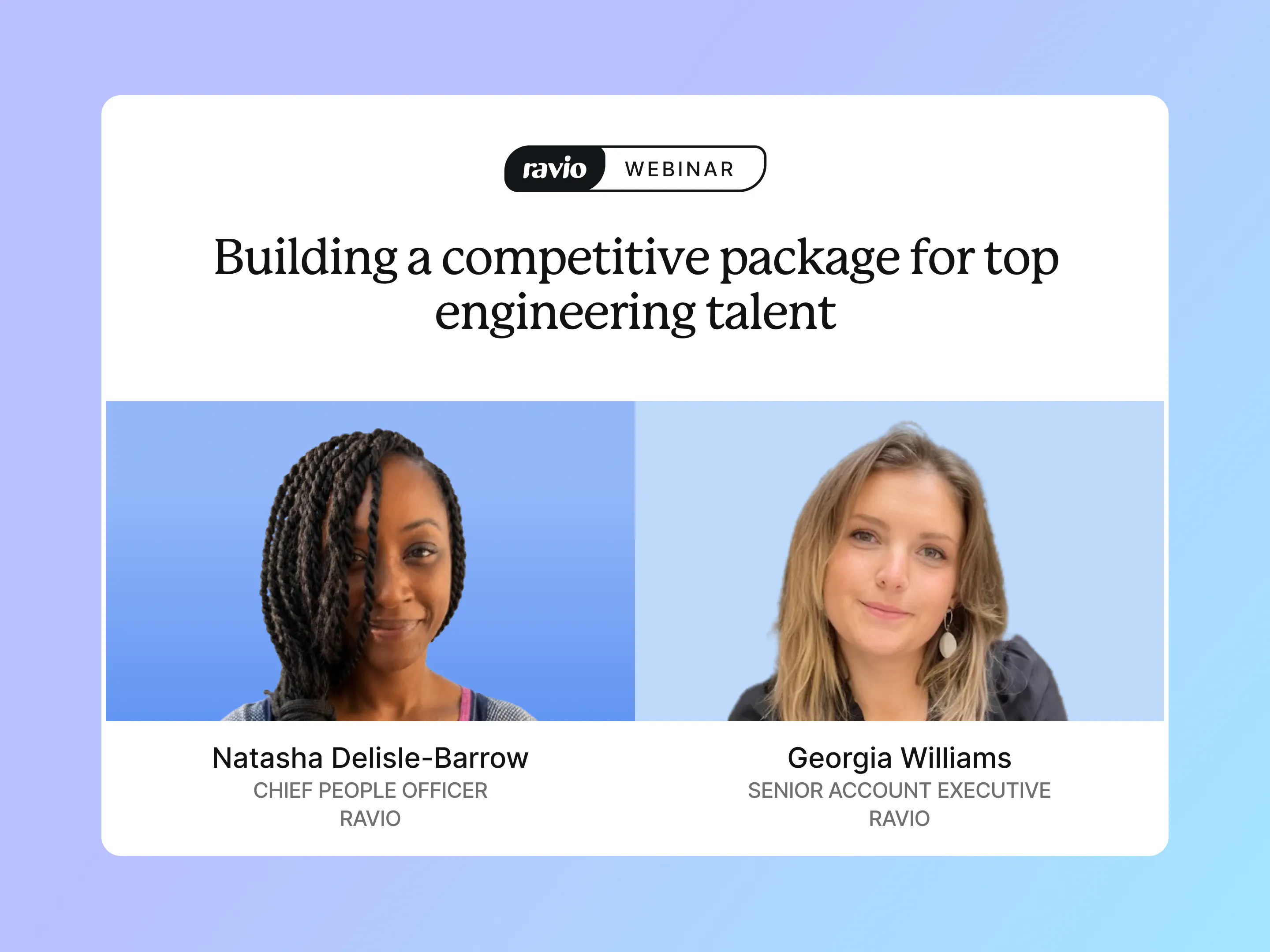
Natasha Delisle-Barrow, Chief People Officer at Ravio, has hired and priced engineering roles herself. Georgia Williams, Account Executive at Ravio, speaks with People and Reward teams about engineering pay every week.

This session covered:

  • Why engineering pay can shift depending on when an offer goes out, and how to avoid it
  • Choosing the right peer group, and why many teams that think they're behind market aren't
  • The AI premium, and what it means for pricing within your engineering team
  • Looking beyond base salary: equity, benefits, and the other levers you can pull

Catch up with the webinar recording on-demand

Watch now

Key takeaways from the webinar

If you're more of a reader than a watcher, here are a few of the most interesting insights from Natasha and Georgia's discussion on building a competitive package for top engineering talent.

Pricing engineering roles is harder than it looks. The market moves quickly, offers get made under pressure, and decisions taken to close one candidate can create problems inside the business for years. Natasha and Georgia looked at where engineering pay tends to go wrong, and what a more deliberate approach looks like.

Key takeaway 1: Engineering pay often reflects when someone was hired, not who they are

For most of the year, new hire and existing employee salaries for engineers sit very close together. But Ravio data shows new hire pay spikes well above existing employees at certain points in the year, most likely when fresh headcount budgets land.

That means the same role, at the same level, can be priced differently purely because of when the offer went out.

Key takeaway 2: Many teams that think they're behind market are benchmarking against the wrong companies

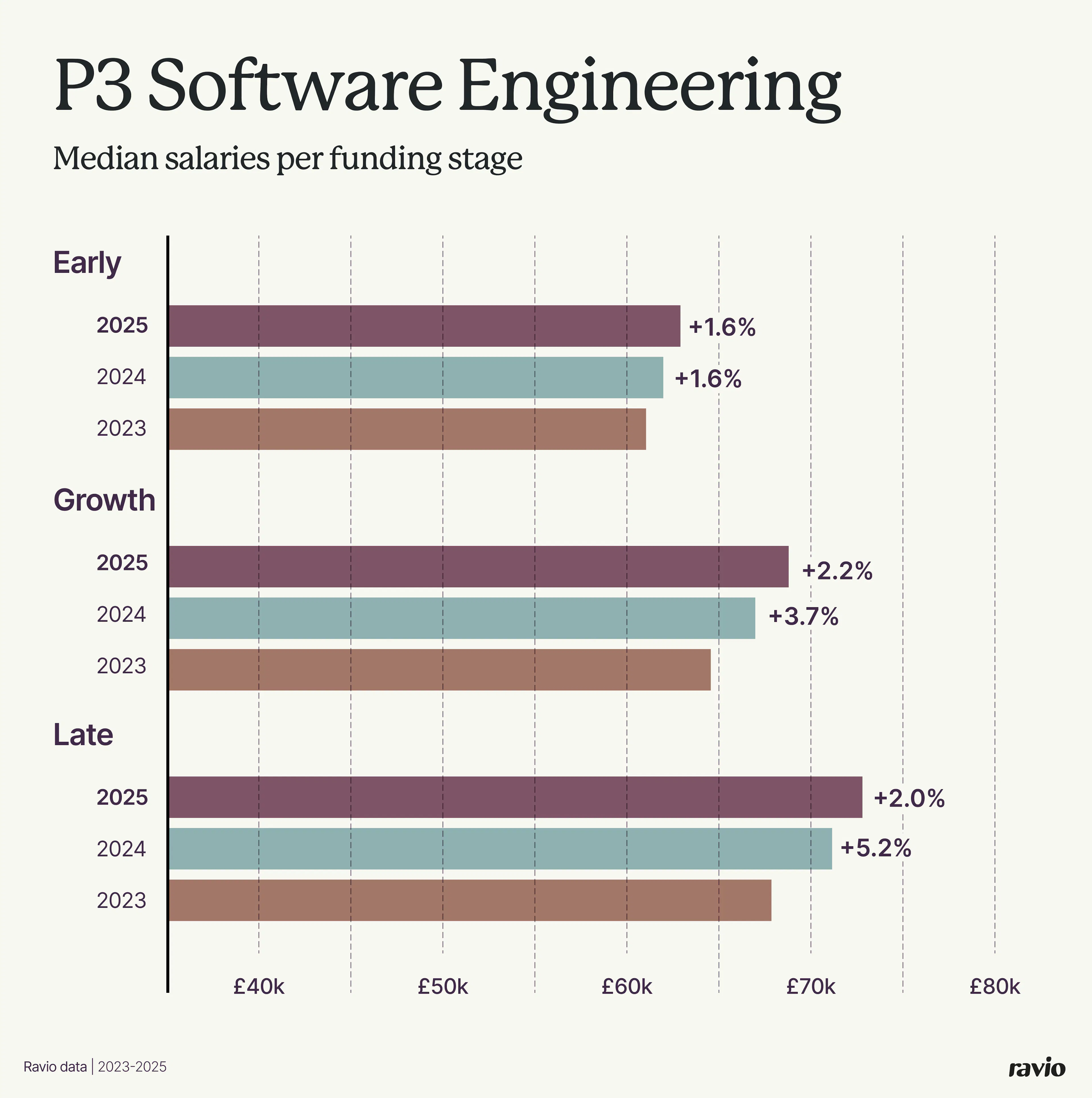
Feeling behind market often comes down to comparing yourself with the wrong peers. Late-stage companies can pay significantly more than early-stage ones for the same level.

Matching late-stage benchmarks without being a late-stage company has knock-on effects. Employees land near the top of their band, in-band progression gets expensive, and there's less room to reward your strongest performers.

Good data won't help much either if you haven't agreed which percentile you're targeting. It just gives everyone a different number to disagree about.

Key takeaway 3: AI engineers are becoming a separate peer group inside engineering

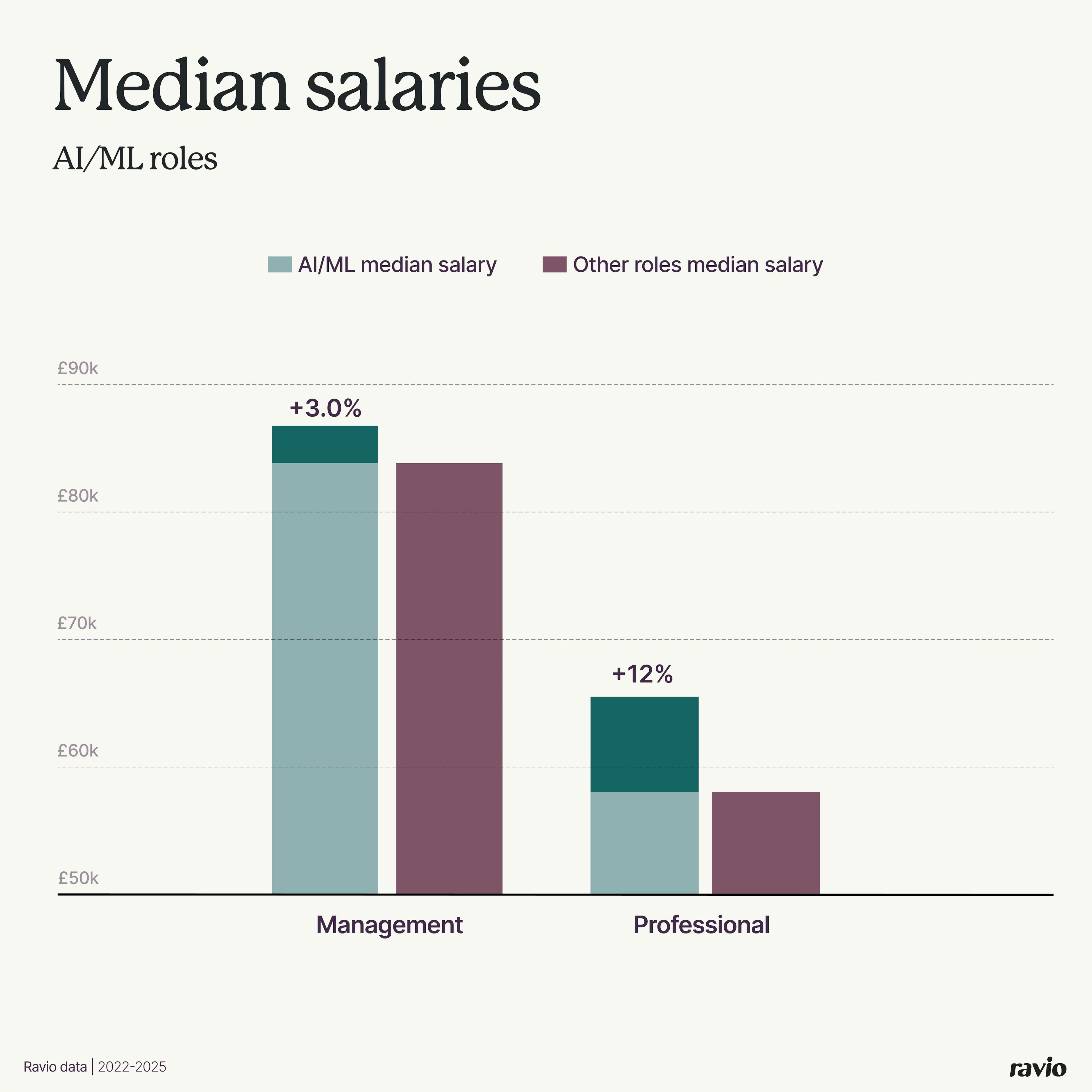
Most companies still price AI and machine learning roles using a general engineering benchmark. But Ravio data shows these roles command a clear premium, particularly for hands-on Individual Contributors who build and work with models day to day.

As AI engineers make up a growing share of engineering teams, people at the same level could be competing in very different talent markets.

Teams pricing every engineer on one flat benchmark risk underpaying their most in-demand people without realising it.

💡 Practical application: Review your current engineering team and flag the roles that need hands-on AI skills. Benchmark those separately from the rest of engineering, and bring finance into the conversation early so the premium is planned for rather than negotiated offer by offer.

Key takeaway 4: Base salary is only part of what you're competing on

When a candidate turns down an offer, the gap isn't always in base salary. Equity can add meaningful value on top of base, especially in markets like the UK, where it's common at tech startups.

Where equity isn't an option, because of regulation, local norms, or business strategy, other levers can carry just as much weight. Flexible working, remote policies, and culture all play a part in a candidate's decision.

Understanding the full competing package, and communicating the value of your own, can often close the gap without raising base pay at all.

Explore Ravio's Platform

Book a discovery call

Get the Compensation Review straight to your inbox

Your monthly dose of market insights and expert perspectives

You might also like