Step 1: Decide the scope and approach
Before anything else, decide what this merit cycle is actually for.
A pure merit cycle might reward performance only.
A broader compensation review, which is what most companies actually run, also covers market adjustments, pay equity fixes, and sometimes promotions.
This is a Reward-and-leadership decision, and it needs a foundation already in place to work from: job architecture, market-anchored salary ranges, and a working performance management process.
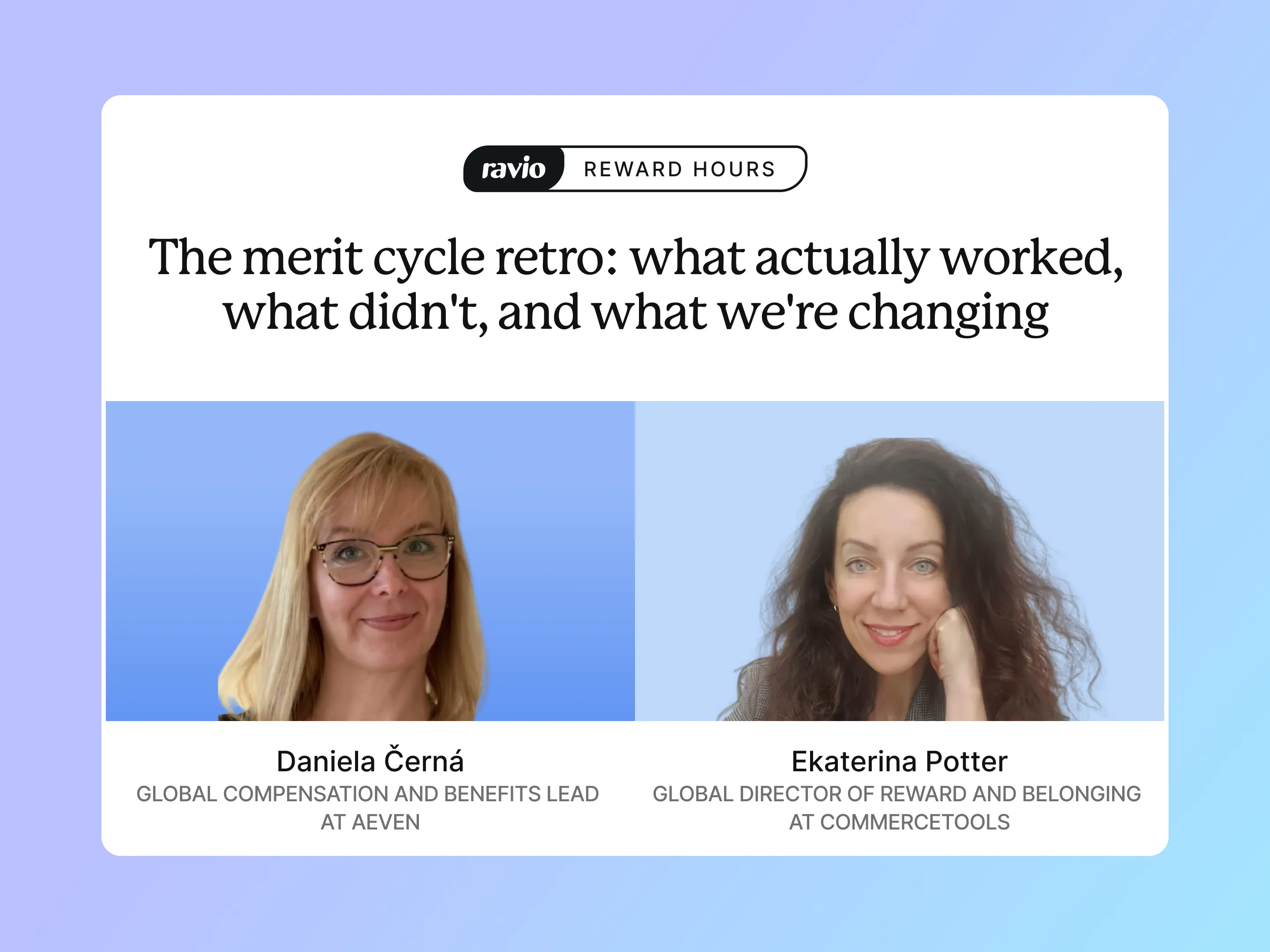
If those don't exist yet, tackle those first – trying to run a merit cycle without them is what Ekaterina describes as her starting point at commercetools, where "our compensation review, before I joined the company, was more like a profit-sharing moment in the past."
The scope of a merit cycle is broad at commercetools – basically all adjustments except promotions sit within the cycle. "It's not only merit that we reward during this process," Ekaterina says. "Merit and rewarding performance is a large part of it – but also it's about market adjustments and addressing any internal gaps.”
Because of this, commercetools' cycle starts with an analysis of where those gaps actually are months before the review actually starts.
To give one example of what this analysis informs, tenure is always a big culprit.
"This is a classic problem in the tech industry, where you have people who are the strongest performers, know our product the best, have been here for a while," she says.
"If you bring in a newcomer, they might be brilliant, but they still need to learn about the product – and those newcomers come in at a compensation that the long-tenured, very wonderful employee needs years to catch up with.”
“So we preemptively look at these gaps, crunch the data, and then make sure we allocate budget into those teams."
At commercetools, promotions run on a separate budget and can happen at any point in the year, rather than being tied to the cycle. “We have an ownership-driven culture, so we really value that managers are trusted to promote their employees at any time," Ekaterina says.
But what works for one company might not work for another, so this first step is about aligning your merit cycle with your compensation philosophy, before anything else kicks off.