Compensation reviewsCompensation strategy
Ravio Breakfast Club London: Comp planning for 2027
Join us for the launch of our Comp Trends 2027 report, fresh off the data.

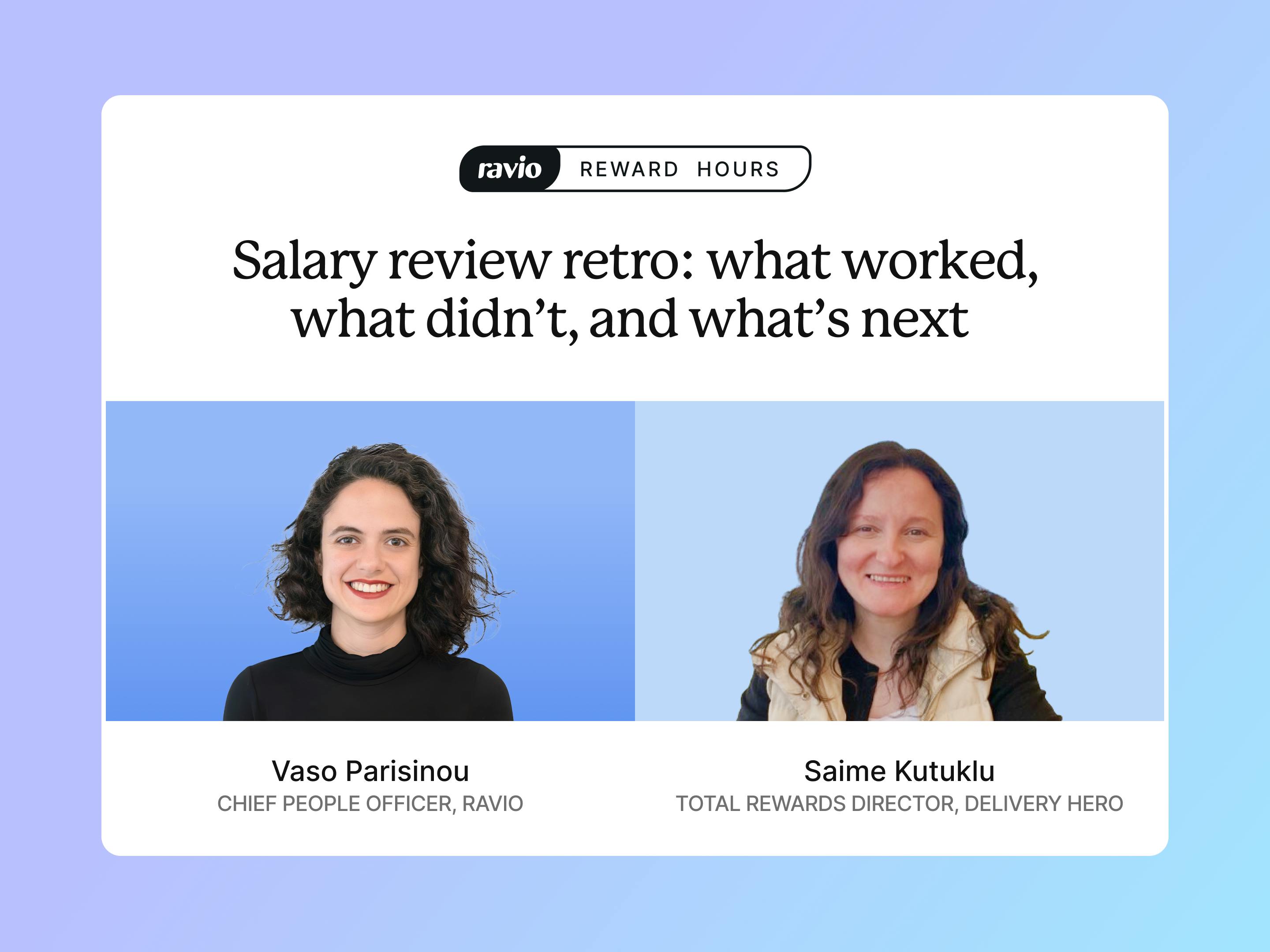
Salary review season is (mostly) behind us. Now's the time to reflect: What actually worked? What would you never do again? And what are you already planning to change for next time?
Vaso and Saime ran a retro on their most recent salary review cycle, from navigating tighter regulations and budget constraints, to wrestling with the promotion-compensation relationship, to streamlining processes that felt never-ending.
The discussion included:
If you're more of a reader than a watcher, here's a few of the most interesting insights from Vaso and Saime's discussion on navigating salary review cycles.
While compensation professionals often see themselves as the "numbers people" in HR, the numbers are actually the easiest part once you get used to them.
The real challenge lies in spending time communicating, ensuring managers and employees understand what you're doing and why.
Managers only go through this process once a year, so they need much more hands on support than we sometimes realise. Making sure people truly understand the process, the principles, and the outcomes is what separates a successful cycle from a chaotic one.
Delivery Hero took two years to successfully separate their promotion process from annual merit reviews, and it transformed how they manage both costs and expectations.
When promotions and merit increases happen together, managers feel pressure to give merit increases to anyone they can't promote, creating budget chaos.
Instead, they established that merit cycles reward performance while promotions reward progression – requiring both individual readiness and organisational role readiness.
The key to making this shift was slow implementation, consistent communication, and pushing managers to think critically about why they need specific promotions.
💡 Practical application: If this sounds right for your organisation, don't try to implement it overnight. Start by keeping two cycles, then gradually reduce to one annual promotion window and one merit window. Add criteria incrementally and spend significant time in conversations with managers about organisational structure and role readiness, not just individual performance.
The longer your salary review process runs, the more it disrupts normal business operations – managers can't stop thinking about performance ratings and compensation decisions while also running their teams effectively.
At Ravio, compressing the process from three months to five weeks required more manual lifting from the people team (like centrally managing peer feedback nominations and booking calibration meetings), but dramatically reduced the organisational burden and freed managers to focus on their core work sooner.
💡 Practical application: If you're a small company, consider taking more central control of operational tasks during comp review to keep the timeline tight. Book the meetings yourself, manage the nomination process, and don't wait for managers to proactively complete tasks. For larger organisations, find the balance between giving managers time to communicate changes and keeping the execution window as short as possible.
If you promote someone to the minimum of their new salary band while hiring external candidates at the midpoint, you're creating a future problem.
In the next pay review cycle, managers will demand catch up adjustments for these promoted employees, consuming budget that could have gone to rewarding performance.
Delivery Hero promotes employees to match the average positioning of their new level, which prevents future compression issues and ensures promoted employees aren't immediately disadvantaged compared to external hires at the same level.
When budgets are tight and regulations limit how much you can differentiate in base pay, make sure differentiation is visible across every compensation element: base pay, bonus, equity, and recognition awards.
If you only differentiate in one component, the overall impact feels minimal.
When you create consistent differentiation across all elements, the cumulative effect becomes meaningful and clearly signals who the highest performers are.
💡 Practical application: Don't abandon forced distribution curves just to avoid difficult conversations. Instead, invest heavily in calibration processes where leaders genuinely debate whether individuals are performing at the right level for their role. Create detailed frameworks for what each performance rating means and hold managers accountable for providing continuous feedback throughout the year, not just during review season.
Your monthly dose of market insights and expert perspectives
Join us for the launch of our Comp Trends 2027 report, fresh off the data.

Join us for the launch of our Comp Trends 2027 report, fresh off the data.

Join us for the launch of our Comp Trends 2027 report, fresh off the data.

