
Compensation strategy
10 best compensation planning software, compared (2026)
Compare the best compensation planning software in 2026. Learn what to look for, compare leading platforms, and choose the right solution for your organisation.

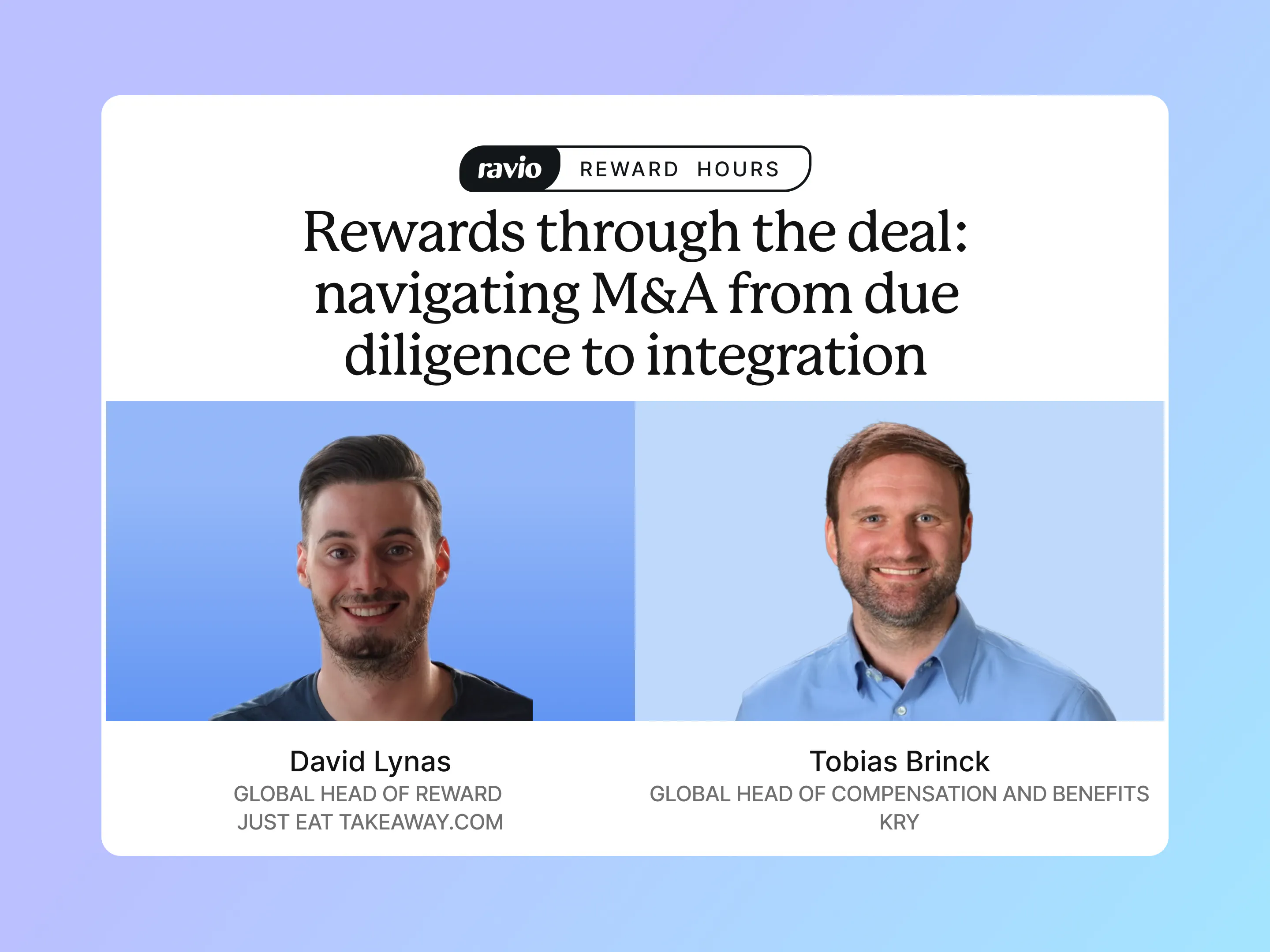
M&A is one of the most requested topics among reward and compensation professionals and yet it's rarely spoken about openly. Whether you're at a company that's about to acquire, about to be acquired, or somewhere in the middle of a messy integration, the rewards challenges are significant and the stakes are high.
David and Tobias have lived through it from multiple angles.
David has led his team through the Just Eat and Takeaway.com merger, the all-share combination with Grubhub, and the recent acquisition by Prosus – covering being acquired, acquiring, and everything in between.
Tobias built the compensation and benefits function for acquisitions at Klarna, integrating companies including PriceRunner and Flex Engage, and has since been navigating more local integrations at Kry, including the recent acquisition of a private health company in Sweden.
Together they walked us through four phases of M&A from a rewards perspective:
If you're more of a reader than a watcher, here's a few of the most interesting insights from Tobias and David's discussion on navigating M&As.
Most reward professionals only think about M&A readiness when a deal is already on the table – which means you’re solving complex questions in a high-pressure, low-time environment.
The decisions you make in day-to-day reward work (bonus plan provisions, share scheme rules, talent retention strategies) should form the foundation of your M&A readiness. If a deal landed tomorrow, would you know what happens to your bonus schemes in a hostile takeover versus a wanted acquisition? Do your equity plan rules account for different deal types?
Being prepared doesn't mean being rigid – it means having a process so that when the unexpected 10% happens, you can handle it calmly rather than reactively.
💡 Practical application: Audit your current reward infrastructure through an M&A lens. Review your bonus plan, share scheme, and redundancy policy for change of control provisions and make sure you know exactly what they'd trigger under different deal scenarios. Build close relationships with your legal and finance teams before any deal happens, to ensure youearn the seat at the table early when one does.
Reward is rarely the first team brought into a deal – that tends to be finance, legal, and the C-suite. But the due diligence checklist for reward is a long one: compensation philosophies, benefits structures, equity promises, contract types, work visas, union relationships, local compliance risks, and more.
The earlier you get involved, the more time you have to uncover what you're inheriting.
The biggest mistakes happen when reward is brought in too late and compliance risks, undocumented promises to key employees, or tricky benefit obligations only surface after the deal closes.
For reward and HR professionals, completion is a flurry of behind-the-scenes activity: equity payouts, compliance checks, day one communications.
But for the employees being acquired, it's a period of real anxiety – about job security, pay, bonuses, and what the future looks like.
The biggest mistake at this stage is going quiet after the "big bang" announcement. Rumours fill silence fast. You don't need to have all the answers, but you do need to be visible, honest about what you don't know yet, and consistent in updating people – even when there's nothing new to report.
💡 Practical application: Plan your communication calendar beyond day one. Week one, month one, and year one all need their own rhythm. If you can't answer a question yet, say so and give a realistic timeline. Overpromising a two-week answer you can't deliver will cost you more trust than admitting you don't know yet.
The most powerful retention lever at completion is clarity: people who know they have a role, understand what it looks like, and feel genuinely engaged are far more likely to stay than people who've been handed a cash retention bonus and left in the dark.
That said, financial retention still has a critical role – particularly for key talent, founders, and reputationally significant people.
Retention approaches need to be segmented: different people need different things, and someone who's just vested millions in equity requires a completely different conversation to someone mid-career who cares about growth and stability.
Bringing two companies together on paper is one thing, but getting employees from an acquired business to feel genuinely part of something new is another challenge entirely.
Leave an acquired company to "run independently" for too long and you risk them building an identity that's resistant to integration later.
The reward piece – aligning compensation philosophies, levelling, benefits – is much easier to land if you've done the cultural groundwork first. That means listening to founders and senior leaders, understanding what's made their company what it is, and being transparent about where the gaps are and how you're bridging them.
💡 Practical application: Don't treat integration as a reward exercise alone. Invest in the relationship – physically if you can. Get buy-in from the acquired company's key people before you roll out any structural changes, so they can vouch for the process to their own teams. And be honest about where your company falls short compared to what they had, alongside where they'll gain. Trust built through transparency is the thing that makes integration actually stick.
Your monthly dose of market insights and expert perspectives
Compare the best compensation planning software in 2026. Learn what to look for, compare leading platforms, and choose the right solution for your organisation.

Learn what compensation management software does, when you need it, and how it helps teams make fair, defensible pay decisions at scale.

The best compensation management software gives you tools for real-time benchmarking, salary bands, compensation reviews, and pay equity compliance. See how top platforms compare in 2026.

