New3x the coverage, same rigorous quality. 300 positions benchmarkedExplore

Selecting a global salary benchmarking provider? Review these 7 factors

Benchmarking

At first glance, a provider offering ‘global salary data’ can seem comprehensive enough to support confident hiring and compensation decisions across markets. 

But that confidence starts to break down at the country level.

For example, a global salary survey provider may have strong data in the US, but gaps, weaker sample sizes, broad location differentials, or outdated, enterprise-heavy data in other regions.

You start noticing the cracks:

  • Benchmarks feel too broad for your hiring market
  • Data confidence drops in smaller or emerging regions
  • You’re forced to rely on guesswork or location multipliers
  • Teams start debating whether the data is actually reliable

And it all means that compensation decisions become slower and harder to defend.

To avoid such a situation, we’ve put together this buyer's guide to help you select a global salary benchmarking provider that best meets your needs. 

We’ll look at 7 factors to evaluate – from regional data coverage to data usability and compliance readiness, so you can assess whether a provider can actually support how your team hires and pays globally.

TL;DR – key takeaways: 

  • Benchmarks have to be specific to your needs. Dig deeper to find out if a pay benchmarking provider actually has the benchmarks you need for every role, level, and location combination. 
  • Global coverage doesn’t guarantee reliable benchmarks. The real question is whether the provider has accurate, defensible data in the specific markets where you hire.
  • Compensation benchmarking vendors should help teams move from pay data to compensation decisions quickly – without relying on spreadsheets, manual job mapping, or inconsistent compensation logic across markets.

7 factors to consider when choosing a global salary benchmarking provider

As you grow across markets, salary expectations, hiring dynamics, and talent demand can vary significantly across different regions and countries – making it harder to stay consistent with salary benchmarking.

Teams start applying different compensation logic, market by market. 

But without reliable benchmarks in place, companies often end up with inconsistent pay decisions, slower compensation reviews, growing internal pushback, and pay gaps that become difficult to defend over time.

That’s why choosing a global compensation benchmarking provider involves much more than comparing salary data coverage.

You also need to evaluate:

  • Whether the provider has reliable data in the markets you hire
  • Whether the data is accurate, up-to-date, and relevant to you
  • Whether benchmarks are fast and easy to use internally
  • Whether compensation decisions can be explained clearly to stakeholders
  • Whether the data can hold up under pay transparency and compliance requirements

The sections below break down these key factors to consider when evaluating a global salary benchmarking provider. Let’s get on with it:  

1. Geographic depth & coverage: Does the provider give you data where you hire? 

The first thing to evaluate when seeking a global compensation data provider is how reliable the data is in the specific markets where you hire. 

See, most global salary benchmarking vendors have stronger data coverage in certain regions than others. So they might say “we have coverage in 100 countries” – but if the data is patchy in the regions you need, that’s worthless.

Pave and Ravio, for example, are global compensation data providers. But Pave has particularly strong depth in the US market, while Ravio is especially strong across Europe. 

See whether Ravio's benchmarks cover your global needs

Outside their core markets, several vendors expand global coverage using location differentials – estimations based on typical differences in pay between locations.

Of course, location differentials can be useful when local benchmark data is limited. But it’s important to understand how they’re calculated – whether benchmarks are adjusted using comparable countries or different regional markets. 

Pave, for example, uses US pay data as a reference market for deriving differentials in regions like Europe. But because the US and European labour markets have very different compensation structures and hiring dynamics, those differentials can become less precise in European markets.

On the other hand, Ravio builds weighted differentials using comparable European labour markets rather than broad regional averages. 

For example, Ravio uses Germany data as a base for Switzerland benchmarks, then weights benchmarks by sample size and calculates differentials across functions and seniority levels to reflect local pay trends more accurately.

So once you start hiring across multiple regions, understanding how providers build benchmarks market by market becomes much more important – especially if you want your compensation decisions to reflect local hiring realities rather than broad regional averages.

Overall, when you’re evaluating geographic coverage, look beyond the total number of countries covered and assess: 

  • Whether the provider has reliable benchmarks for the roles you need in every location – and which of those are built off real sample data vs being derived from location multipliers 
  • Whether the benchmarks align with your peer group and the companies you’re competing with for talent
  • Whether smaller, emerging, or niche markets are supported with enough local data 
  • Whether benchmarks are available at both the country and city levels
  • Whether currency conversions and cross-market comparisons are handled consistently
  • Whether benchmark data is updated consistently across all regions, not just core markets
  • Whether you can create location-specific salary bands easily (if you're looking for a tech-first benchmarks provider that lets you build salary bands)

The key question here is simple: Can you trust the data in the exact markets where you’re making compensation decisions? 

Because global coverage only matters if the benchmark coverage holds up market by market – not just at a global average level.

2. Industry coverage: Is the data relevant to your talent market?

A Series B fintech hiring senior engineers competes in a very different talent market from a large enterprise hiring generalist software roles, even within the same country. 

That’s why strong geographic coverage alone isn’t enough.

You also need to understand where the compensation data itself comes from and whether it reflects the companies you actually compete with for talent. 

For example, benchmark data sourced heavily from large enterprises doesn’t reflect compensation expectations in fast-growing tech markets accurately, where team structures, role scope, and pay progression often look very different.

That’s why tech companies prefer providers with datasets built around tech and tech-enabled businesses specifically, rather than broad general-market salary surveys

Look at whether you can filter benchmarks by: 

  • Industry or sector (e.g., fintech vs broader tech)
  • Company size and growth stage 
  • Location and hiring market 
  • Role family, seniority, and specialisation 
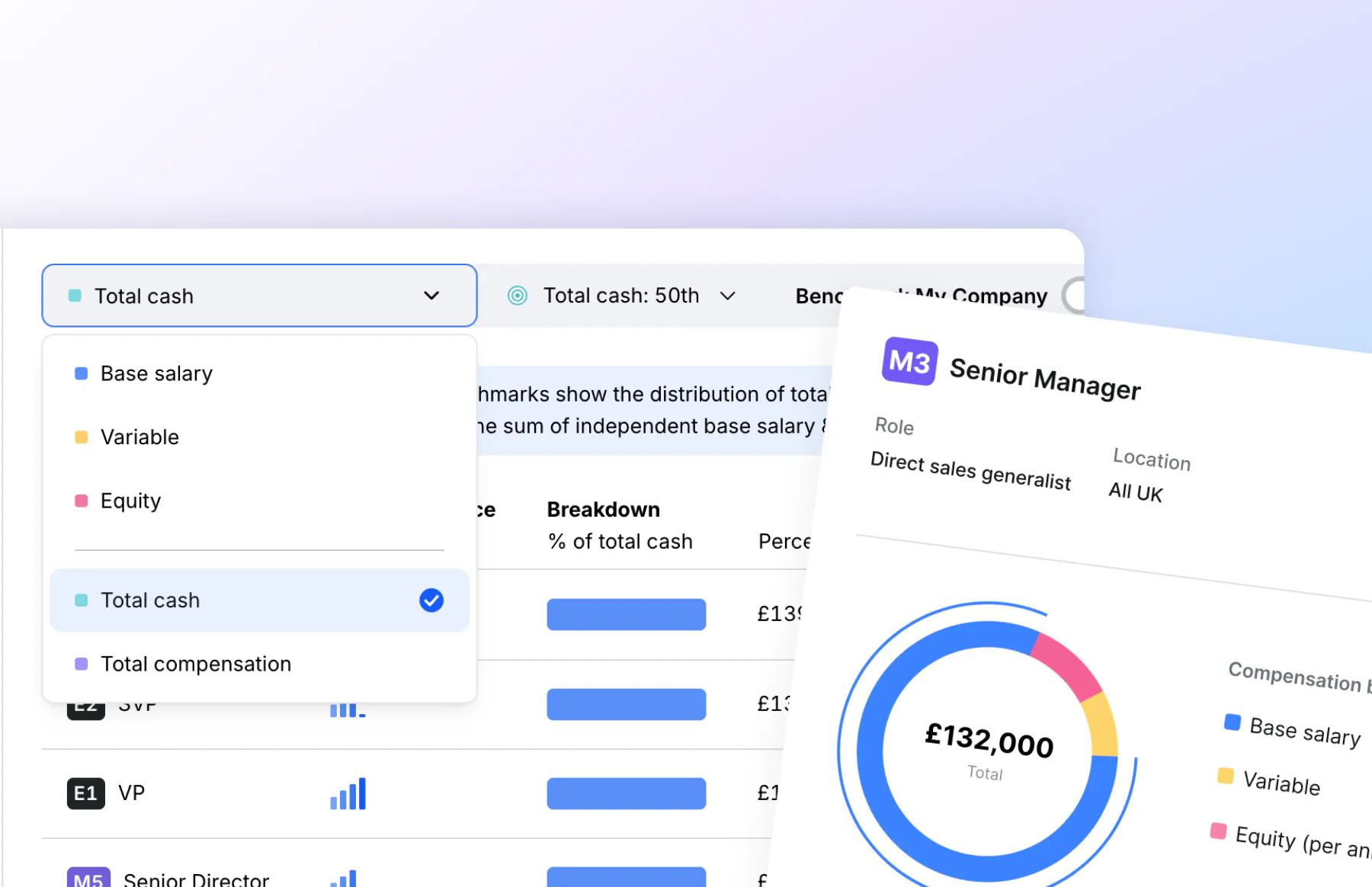
  • Compensation type (base salary, bonus, equity, or total compensation) 

For example, Ravio and CompensationIQ allow teams to filter compensation benchmarks by industry, funding stage, company size, and location.

Explore Ravio's benchmarks for free

Without this level of filtering, benchmarks can quickly become too broad to reflect your actual hiring market. In fact, applying these filters can often expose where benchmarks for specific roles lack. 

The same is true of how easy the global salary benchmarking provider makes it to align their benchmarks to your internal compensation philosophy – do they have the benchmarks you need for each location at the target percentiles you apply, across all elements of total rewards that you include in packages?

For instance, when you try to find the P75 total cash benchmark for a P5 Software Engineer in Estonia at a Series A fintech company, you might just find that there’s no data available for it – despite all that global coverage. 

Ravio benchmarking: location filters

3. Data reliability: Can you trust how the data is built? 

Global salary benchmarks are only useful if you can trust how the underlying data is collected, verified, and maintained.

That’s why evaluating compensation data methodology matters just as much as evaluating location and industry coverage. Understand: 

How is the compensation data sourced? 

Traditional salary survey providers often rely on “give-to-get” survey models, where companies manually submit compensation data periodically in exchange for benchmark access.

The challenge here is two-fold: 

  • Manual submissions naturally introduce room for reporting inconsistencies and human error across the dataset – especially as companies have to manually format and align their data to standardised survey templates.
  • Point-in-time survey data, typically collected annually or quarterly, lags behind market conditions by the time it’s published – particularly for fast-evolving roles like AI and ML engineers.

By comparison, software-first data providers using HRIS integrations pull compensation data directly from source systems in real time, reducing manual reporting errors and keeping benchmarks fresher over time.

That freshness matters more than many teams realise – specifically in fast-moving hiring markets like tech, where compensation data changes quickly.

How is the data validated and maintained?

You also need to understand how providers review, clean, and maintain the quality of the pay data after it’s collected.

For example:

  • How are outliers and duplicate entries identified?
  • How are new benchmarks reviewed before publication?
  • Can teams understand which types of companies contribute to the benchmark dataset?
  • How frequently is benchmark data refreshed and validated?

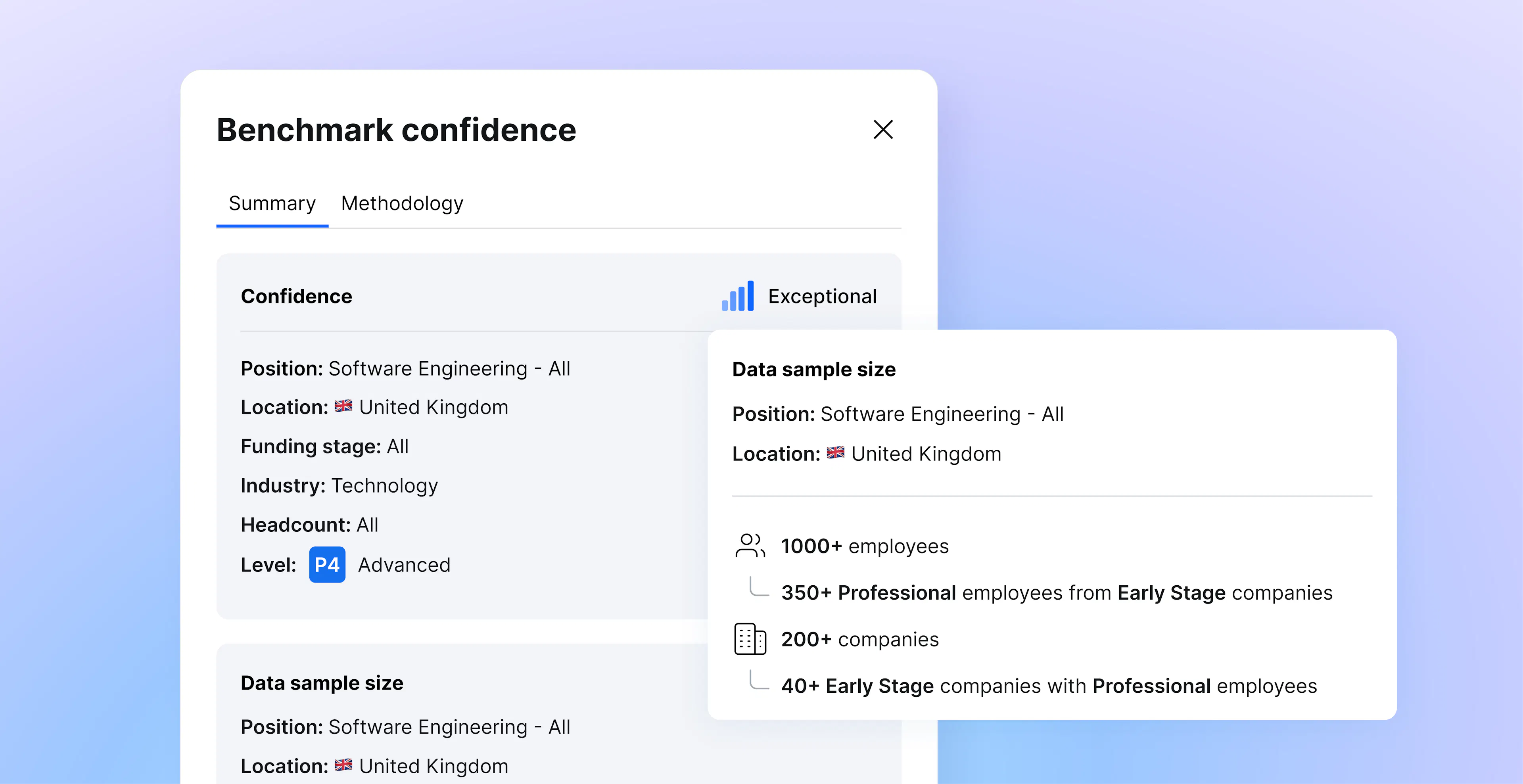
Ravio, for instance, sources up-to-date pay data through HRIS integrations and uses a team of data scientists to validate data monthly, identify outliers, and ensure new benchmarks align consistently with your job architecture – with transparent sample sizes and confidence levels to make it easy for you to trust and defend benchmarks. 

Ravio's sample size indicators

How are job roles and levels mapped?

Two companies may both use the title “Product Manager,” while the actual role scope, seniority, and responsibilities look completely different internally.

This makes job mapping another important part of compensation benchmark reliability.

Manual job mapping leaves teams interpreting and aligning raw data themselves – making comparisons less consistent and harder to apply across pay decisions.

So take the time to understand how providers map roles and levels. Ask:

  • Is job matching fully automated, supported by a human team, or left entirely to you?
  • If job mapping is supported, can you review or adjust mapped benchmarks where needed?

The more accurate the job levelling process is, the more reliable and usable the benchmarks become in practice.

Ultimately, focus on making sure you understand and can defend how the data is built. Ask yourself: 

  • Can we explain why we trust this data internally?
  • Is the methodology transparent enough to defend?
  • Do other companies similar to ours use this provider?
  • Will leadership, finance, and hiring managers trust these benchmarks?

4. Data usability: Can you use the data quickly? 

Market pay data is also most useful if teams can access, understand, and apply it quickly in real compensation decisions.

That’s where evaluating data usability comes in.

In many organisations, compensation workflows still rely heavily on spreadsheets or static survey cuts that give you raw data, not instantly usable benchmarks.

In this case, pulling benchmarks for a specific role, level, and location can become surprisingly slow – especially when teams need to manually align that data to their job architecture

This is where software-first benchmarking providers help.

Instead of giving teams raw compensation data to interpret manually in spreadsheets, tech-first providers deliver benchmarks in a platform, already mapped to your job roles and levels (though job mapping specifics vary by provider). 

This makes benchmarks faster to use and easier to apply consistently across pay decisions.

When evaluating providers, assess whether:

  • Benchmarks are ready to use and easy to communicate internally
  • Benchmarks translate clearly into salary bands, offers, and equity decisions
  • Benchmark context is clear enough to explain and defend decisions internally

Ideally, your team should be able to move from benchmark data to compensation decisions quickly – without creating more interpretation work internally.

5. Compliance: Can I defend it externally? 

When evaluating compensation benchmarking vendors, a lot of compliance comes down to what employee data you’re sharing – and how that data is protected.

With traditional salary surveys, companies usually control what compensation data gets submitted manually. But with real-time benchmarking platforms, you’re often connecting your HRIS directly, which may contain employee personal data.

This makes vendor security, privacy standards, and data governance critical. 

You need confidence that providers only access the data they need, store it securely, and handle it responsibly.

And as regulations like the EU Pay Transparency Directive increase pressure around explainable compensation decisions, vendor transparency and data governance becomes even more important.

Because you need to do more than make competitive pay decisions – you also need to explain and defend how those decisions were made.

Ask:

  • Is the provider GDPR compliant? Are there other data laws across other markets you need to consider?
  • Where is compensation data stored and processed?
  • How is sensitive employee compensation data protected?
  • Are benchmark collection and verification methodologies transparent enough to support pay transparency requirements?
  • Can compensation decisions be explained clearly if challenged externally?

If you're hiring across Europe or headquartered in the region, consider providers with strong GDPR, privacy, and security standards.

Ravio, for example, is fully GDPR compliant, uses encrypted data storage, and supports UK and EU GDPR-compliant data protection agreements as part of onboarding. 

Ravio benchmark data is also anonymised and aggregated to prevent individual employees or companies from being identified.

Your team should be able to clearly explain and defend the data behind compensation decisions if questioned by employees, leadership, or regulators.

7. Pricing: How much does it cost?

Some global compensation benchmarking vendors, such as traditional survey companies, are primarily data-only providers. 

They often price based on location – so if you’re looking for global coverage, you’ll likely need to purchase separate country or region-specific surveys to access benchmarks you need. Meaning, costs can quickly increase as you expand into new hiring markets. 

On the other hand, compensation software providers often combine pay benchmarks with features like salary bands. Pricing models vary here as well – with some providers charging per employee, others per seat, or pricing different platform modules separately.

That said, never evaluate pricing in isolation. 

Lower-cost compensation data can still become expensive operationally if teams spend significant time validating benchmarks, interpreting raw survey exports, or manually aligning data across compensation decisions.

That’s why it’s important to consider both the cost of the data and the internal workload required to make the benchmark data usable.

This is also where tech-first providers can create operational efficiency. 

Ready-to-use benchmarks, automated role mapping, and integrated compensation workflows can reduce manual interpretation and admin work teams need to handle internally.

For smaller People teams, especially, ease of use and implementation time can matter just as much as benchmark depth.

Some providers also offer free benchmark access or limited free benchmarking tiers, which can be useful for evaluating benchmark relevance before committing to a larger compensation platform rollout.

Ravio, for example, offers three free benchmarks so teams can test benchmark quality, peer relevance, and market coverage before building internal buy-in.

When evaluating pricing, assess:

  • Whether pricing is based on employees, seats, or platform modules
  • What’s included in the base benchmarking product
  • Whether compensation planning workflows are included or require separate software
  • How much manual work is required internally
  • Whether the platform fits your team’s current compensation maturity and complexity
  • Whether you can test benchmark relevance before committing fully

If you want to understand how benchmark quality impacts compensation costs, hiring efficiency, and pay decisions over time, this guide on the ROI of reliable compensation benchmarks breaks it down in more detail.


Choosing a global salary benchmarking provider goes beyond coverage

As companies scale across markets, the challenge isn’t just accessing more salary data globally – it’s making sure the benchmark data is reliable, relevant, easy to apply internally, and defensible externally.

The right global salary benchmarking provider should help your team make compensation decisions more confidently and consistently across every market you hire.

Before committing to a compensation benchmarking platform though, test whether the benchmark data actually reflects your hiring markets, roles, and compensation philosophy.

Ravio offers three free benchmarks so you can test benchmark relevance and data coverage in your hiring markets before committing to it.

Try out Ravio with 3 free benchmarks

FAQs 

What are some of the best providers for global salary benchmarking? 

Some of the best global salary benchmarking providers include:

  • Ravio, best for high-growth tech companies worldwide, especially those hiring heavily across Europe
  • Pave, best for US-based tech startups and enterprises needing strong compensation data across North America and the UK.
  • Mercer, Radford, WTW – known and respected with large datasets, but check local coverage in the markets and roles you need to hire in, as often there are gaps in newer or nicher markets and roles.

The right provider for your company depends on where you hire, the industries and roles you benchmark, how transparent the data is, and whether your team needs compensation workflows beyond benchmark access alone.

Why does salary vary so much between locations?

Salary varies between locations because labour markets, talent demand, competition for specific roles, and compensation expectations differ significantly country by country. A senior software engineer in London, for example, competes in a very different hiring market from one in Lisbon or Warsaw – even within Europe – due to differences in local hiring demand, market maturity, and availability of specialised talent.

Should I use location differentials or local data?

Local benchmark data is generally more reliable because it reflects actual compensation patterns within that market. Location differentials can still be useful when local benchmark data is limited, but their accuracy depends heavily on how they’re calculated and whether they’re based on comparable labour markets.

Can I trust global salary benchmarks for my specific country?

Only if the provider has strong benchmark depth in the market you hire. Many global providers have stronger data coverage in certain regions than others, so evaluate local sample sizes, role coverage, benchmark confidence levels, and whether benchmarks rely on local data or location differentials, and how those differentials are calculated. 

What ROI should I expect from better benchmark data?

Reliable benchmark data improves compensation consistency, speeds up salary decisions, reduces manual benchmarking work, and helps companies avoid overpaying, underpaying, or creating pay gaps unintentionally. It also improves stakeholder confidence and supports more defensible compensation decisions as companies scale. Here’s a data-backed breakdown of the ROI of reliable compensation benchmarks

How do benchmarking tools integrate with HRIS?

Many tech-first compensation benchmarking providers integrate directly with HRIS platforms to pull compensation and employee data automatically. This reduces manual survey submissions, improves data freshness, and helps keep compensation benchmarks updated more continuously over time.

What should you look for in a compensation benchmarking provider?

Look for providers with reliable regional benchmark depth, transparent data collection and verification methodologies, relevant peer group data, automated job mapping, easy-to-use compensation workflows, and clear GDPR and pay transparency standards. Benchmark quality, usability, and defensibility matter far more than the total number of countries covered. Here’s why it helps to trust a provider with less but relevant data versus a global company with millions of data points. 

What is the difference between real-time and survey-based compensation data?

Survey-based compensation data is typically collected periodically through manual company submissions, while real-time compensation data is updated more continuously through HRIS integrations. Real-time data is generally fresher and reduces manual reporting inconsistencies, especially in fast-moving hiring markets like tech.

How do you ensure compensation data is statistically reliable?

Reliable compensation data depends on strong sample sizes, relevant peer groups, consistent role mapping, transparent data sourcing methodology, and ongoing data validation. Providers like Ravio also use data scientists to review outliers and duplicate entries, validate benchmarks, and provide confidence indicators that help teams assess benchmark reliability more accurately.

Get the Compensation Review straight to your inbox

Your monthly dose of market insights and expert perspectives

You might also like