Compensation reviewsCompensation strategy
Ravio Breakfast Club London: Comp planning for 2027
Join us for the launch of our Comp Trends 2027 report, fresh off the data.


"Your total compensation is about half what I'd expect."
The words every startup founder dreads hearing from their dream CFO candidate.
You’re hiring your first non-founder executive. You thought you'd been generous. They think you're lowballing them.
This is the moment most startups realise they have no idea how to properly structure executive compensation.
The compensation framework you have in place for the rest of the organisation isn’t helping, because every executive hire is high-stakes, every candidate brings different expectations, and market benchmarks for executive packages vary wildly.
You need enough structure to make defensible decisions, whilst maintaining the discretion to negotiate competitive packages that win the leaders you need. Lean too far either way and you'll either lose great candidates or create inconsistencies that become impossible to defend as you scale.
It isn’t easy, so we’ve brought in the experts to share their advice on designing executive compensation for startups and private companies – Rob Green (Founder of Darwin Total Rewards) and Figen Zaim (Founder of Olivier Reward Consulting).
Executive compensation packages combine multiple elements to create a competitive total offer: base salary, short-term incentives, long-term incentives (typically equity), and benefits.
“Leveraging every element of total compensation is important for every employee in a company, but it’s especially important for executives,” says Figen Zaim. “Aim for a holistic package that isn’t overreliant on one element.”
The right mix depends entirely on your company context – so before determining the total compensation mix, you need philosophical alignment on what's right for your company.
"Most of my compensation projects start with what I call the 'anchoring conversation'," explains Rob Green. "I sit down with the CHRO, the founder, and the rest of the C-suite, to discuss the core principles behind how employees (including executives) should be compensated.”
“What typically plays out is that I hear four or five different philosophies in that room.”
This misalignment is why executive compensation projects often feel stuck before they've even started. One leader believes market-leading compensation to bring top leaders in is crucial for the company’s success, another wants to preserve cash and over-index on equity, another thinks avoiding ownership dilution is vital, and the founder thinks the company's mission should be enough to win talent.
"It can lead to quite sticky conversations at the start," Rob continues. "But you need to understand the different perspectives before you can move forward."
The compensation philosophy conversation should cover:
Once you've aligned on these principles, the total compensation mix starts to emerge.
A company with stable cash flow and an aversion to equity dilution might lean toward competitive base salaries and bonus structures. A pre-revenue startup asking executives to take significant risk might compensate with larger equity grants. A company focused on hitting aggressive annual revenue targets might build in meaningful short-term incentives tied to those KPIs.
With these components and philosophical foundations in place, you're ready to start designing executive packages.
But even with strong foundations, certain challenges consistently trip up Reward Leaders working on executive compensation plans.
Here's how our experts navigate those challenges.
"Sometimes you go in with a structured approach – let's look at our philosophy, let's look at who your peers are, what they're doing, can we get the feel of the market – but they already have the output in mind," explains Figen. "Really they just want you to validate their view."
This is one of the most common tensions in executive compensation work. The Reward professional wants fairness, consistency, and defensibility. The founder wants the discretion to negotiate for each individual candidate’s needs.
The solution isn't to force structure where it doesn't fit.
Instead, it’s about education: “At least 10% of an executive compensation project is education, especially if you’re working with first-time founders,” says Figen, “you need to help them understand the implications of their choices.”
And then it’s about enabling flexibility: “Flexibility and adaptability is crucial as a Reward professional working on executive compensation,” says Rob. “Enable the discretion your stakeholders and business need, whilst always flagging the pros and cons if the approach goes outside of agreed principles or governance.”
Take market positioning, for instance. You need to use market benchmarks to understand what's required to win and retain talent amongst your peer group (more on this later), but those benchmarks are used directionally rather than as a rigid compensation range.
In practice, that means designing flexibility into the executive compensation approach:
"Never let go of your logical approach, but do expect grey areas so that you aren’t disheartened when they arise. Understand their situation, and then use your creativity to find the middle ground.”

Figen Zaim
Founder of Olivier Reward Consulting
How does executive compensation change when your company goes public? Figen and Rob shared their advice on the topic for listed companies in the second article of this series. Read it →
As Rob highlighted earlier, it’s common to see founders or leaders with very different opinions on compensation – including executive compensation – should be done.
When one voice dominates and pulls in a different direction, it can derail the entire process.
“I’ve had situations where we’ve aligned on a clear plan, and then the CEO still goes against it,” Rob shares. “In one instance, it meant a C-level member was deliberately left with no equity to vest. It was an immediate retention issue, but by design, it’s what the CEO wanted.”
There’s always something driving this kind of decision.
In Rob’s scenario, for instance, “the company was going through an evolution in their culture and performance management” that meant the impact on retention was an accepted risk in the short term.
Understand why they're steering in this direction, uncover any context you’re missing, and then make the risks explicit.
"In most cases it’s just the practicalities of the organisation," Rob says. “The Reward function's role is to advise and flag pros and cons, in support of finding strategic solutions.”
"At least 10% of any executive compensation project is education, especially if you're working with first-time founders. You need to help them understand the implication of their choices."
Figen Zaim
Founder of Olivier Reward Consulting
Some founders see equity as the solution to every executive compensation challenge. Can't afford competitive salaries or bonuses? Add more equity. Need to win over a great executive candidate? Add more equity.
"I've worked with startup clients that don't believe in bonuses," says Figen. "They don’t want to spend the cash or they don’t see how performance can be objectively measured, so they'd rather just add more equity onto the executive package.”
"It makes equity sound like monopoly money, like it isn’t really important to the company,” she adds, “when actually having equity should feel like an exclusive club.”
Plus, as Rob adds, equity is only a persuasive compensation lever if the path to liquidity feels achievable. “If you’re accelerating on equity, but there’s actually no fuel in the tank – no valuation or no communication about what equity means – then it becomes very problematic.”
Equity is a crucial element of startup executive compensation, but it isn’t the only lever – as we’ve already seen, leveraging all aspects of total rewards is crucial.
When leaders want to over-index on equity:
"You can make someone's day or ruin their day by giving them the same amount of equity. Context and communication make all the difference."

Rob Green
Founder of Darwin Total Rewards
You need to understand market rates, but executive compensation benchmarking is notoriously difficult – small sample sizes because there’s only a handful of executives per company, and a lot of volatility due to the wide-ranging approaches to total compensation.
Both Figen and Rob agree that defining the right peer group is key.
The two common peer group mistakes are:
Rob's approach is to cut through this and get to the heart of the company’s actual talent competitors: "The key question I always ask is: if you had to rehire your C-level tomorrow, where would you hire them from?"
"Typically they'll give you a short menu, but it’s easier to build on that menu than to start from something too wide," Rob explains.
When you have multiple executives, determining fair relative compensation becomes surprisingly complex.
"I've been asked if I can do a salary band for the C-level," says Figen. "That was a bit like: how do you say no in the nicest possible way?"
The problem with creating one pay range for all executives is that it assumes all C-level roles are comparable and have equal value to the business.
That’s rarely true in actuality: executives' responsibilities, and even levels of seniority, differ significantly.
"My first question is: do you consider all C-levels to be at the same job level?" Figen explains. "Normally companies do slice and dice their C-level, with layers of seniority even within the executive team.”
“It’s really about finding the benchmark for the role they actually do,” she continues.
“A CRO and a CFO have very different roles, so you wouldn’t expect them to be paid at the same level. For private companies, VC or PE-backing also has an influence – if investors are pushing for a focus on revenue, then the Chief Revenue Officer might be more valuable to your company than to those in your peer group.”
To get this right:
“In executive compensation, fairness comes from understanding the value of each executive role to the business.”
Rob Green
Founder of Darwin Total Rewards
Getting executive compensation right at a startup is all about navigating the tension between structure and flexibility.
As Figen put it: "Never let go of your logical way of doing things – it's a superpower of Rewards professionals. But expect the grey areas so you aren't disheartened when they arise. Understand the situation, and then use your creativity to find the middle ground."
To wrap things up, here are the core principles we’ve seen on designing executive compensation plans:
Your monthly dose of market insights and expert perspectives
Join us for the launch of our Comp Trends 2027 report, fresh off the data.

Join us for the launch of our Comp Trends 2027 report, fresh off the data.
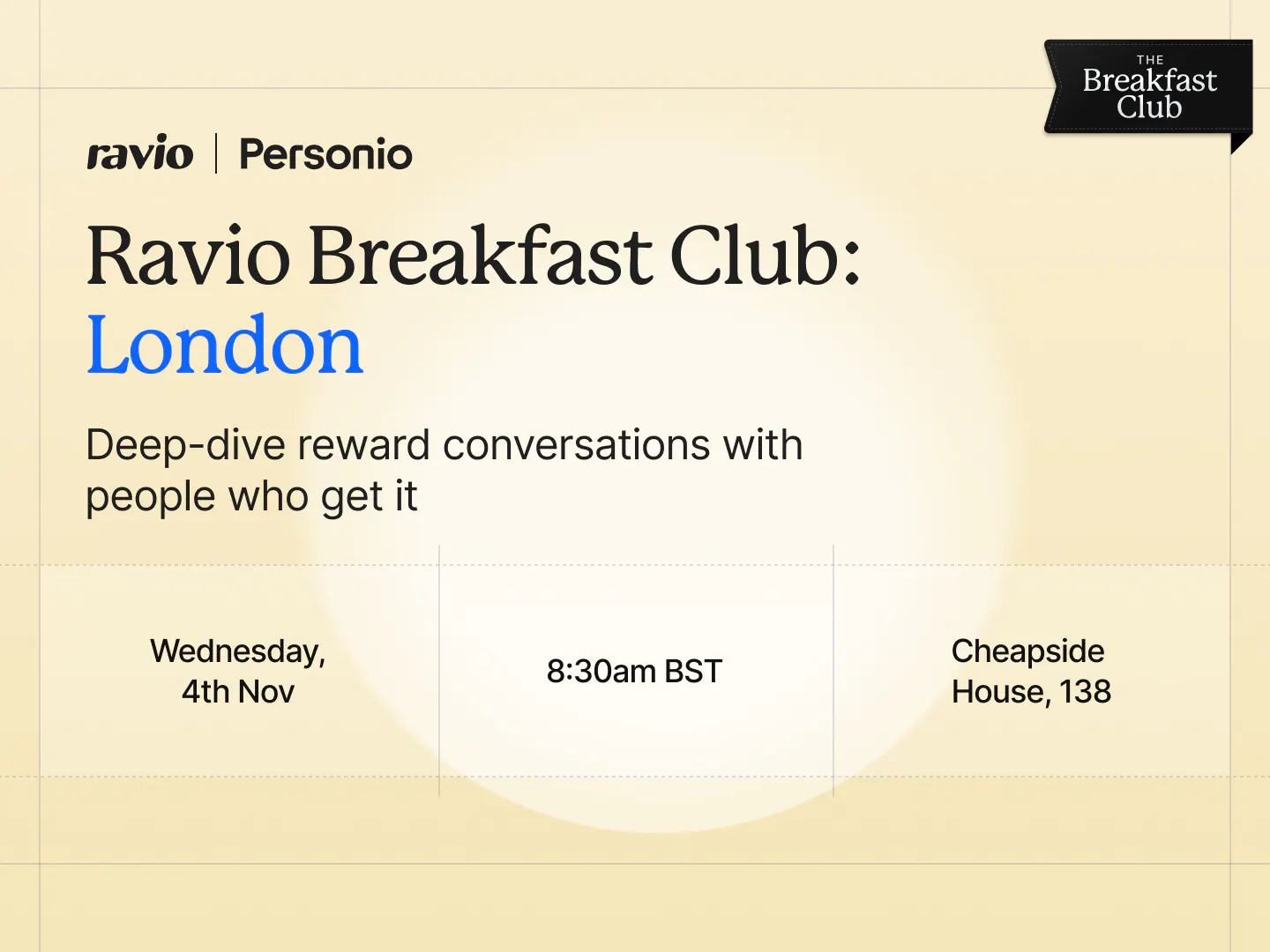
Join us for the launch of our Comp Trends 2027 report, fresh off the data.

