Personalised benefits: how to move beyond one-size-fits-all
Personalised benefits allow employees to select the employee benefits package that best suit their individual needs and circumstances, from a range of benefits choices available.

Designing the right employee benefits package isn’t just about adding an endless list of perks.
It’s about making strategic choices that balance employee needs with the company's core values and with benefits costs.
Companies that strike the right balance don’t just win talent, but also help to separate themselves from competitors – especially nowadays, with employees looking beyond just salary – seeking flexible work, meaningful perks, and a company that aligns with their values.
In this employee benefits guide, we’ll explore everything you need to know about building a benefits package that strengthens your compensation strategy and helps your brand stand out.
Subscribe to our newsletter for monthly insights from Ravio's dataset and network of Rewards experts 📩
Employee benefits are non-wage components of a total rewards package that organisations provide to employees. The number and range of benefits a company offers will depend on its location, industry, compensation approach, and budget.
Employee benefits are either mandatory (required by law) or optional, used to make a total compensation package more competitive in the market.
Mandatory benefits, otherwise known as statutory benefits, range across different countries but typically encompass benefits like pension contributions, paid sick leave, and health insurance.
For example, in the UK, all companies must offer statutory maternity and paternity pay and leave, adoption pay and leave, an opt-out pension scheme, and more. In comparison, employee benefits in France cover private healthcare and 50% of commuting costs.
When it comes to optional benefits, many organisations choose to enhance certain mandatory benefits, going above and beyond the statutory minimum for benefits like parental leave or offering unlimited PTO. Other optional benefits (sometimes known as perks or fringe benefits) could include free office lunches, professional development budgets, or flexible working opportunities.
Employee benefits are an important addition to a total rewards package.
For employees, benefits can provide additional financial security, with offerings like stock options, commuter expenses, and gym stipends all helping to help people manage their money over time.
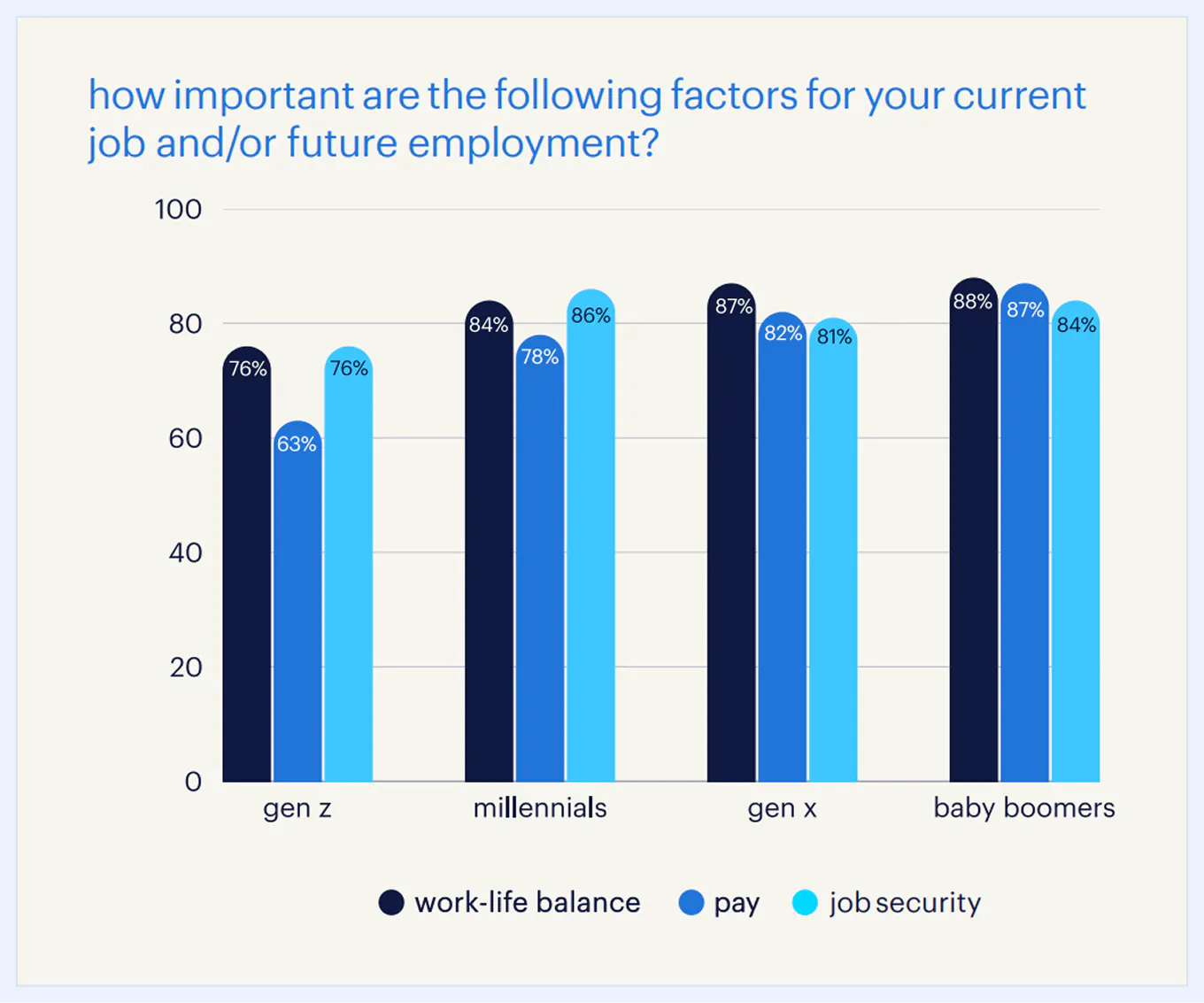
Employee benefits can also be crucial in supporting a better work-life balance – something that is particularly important for new generations of workers.
In fact, work-life balance was voted as a higher priority than pay for the first time in Randstad’s 2025 Workmonitor report across all generations.

For organisations, employee benefits play a crucial role in making a total compensation package more competitive, helping to set their brand apart by offering employees what they value most in a workplace beyond just salary.
This is vital for hiring, retention, and employee engagement objectives – ultimately supporting a productive and efficient team.
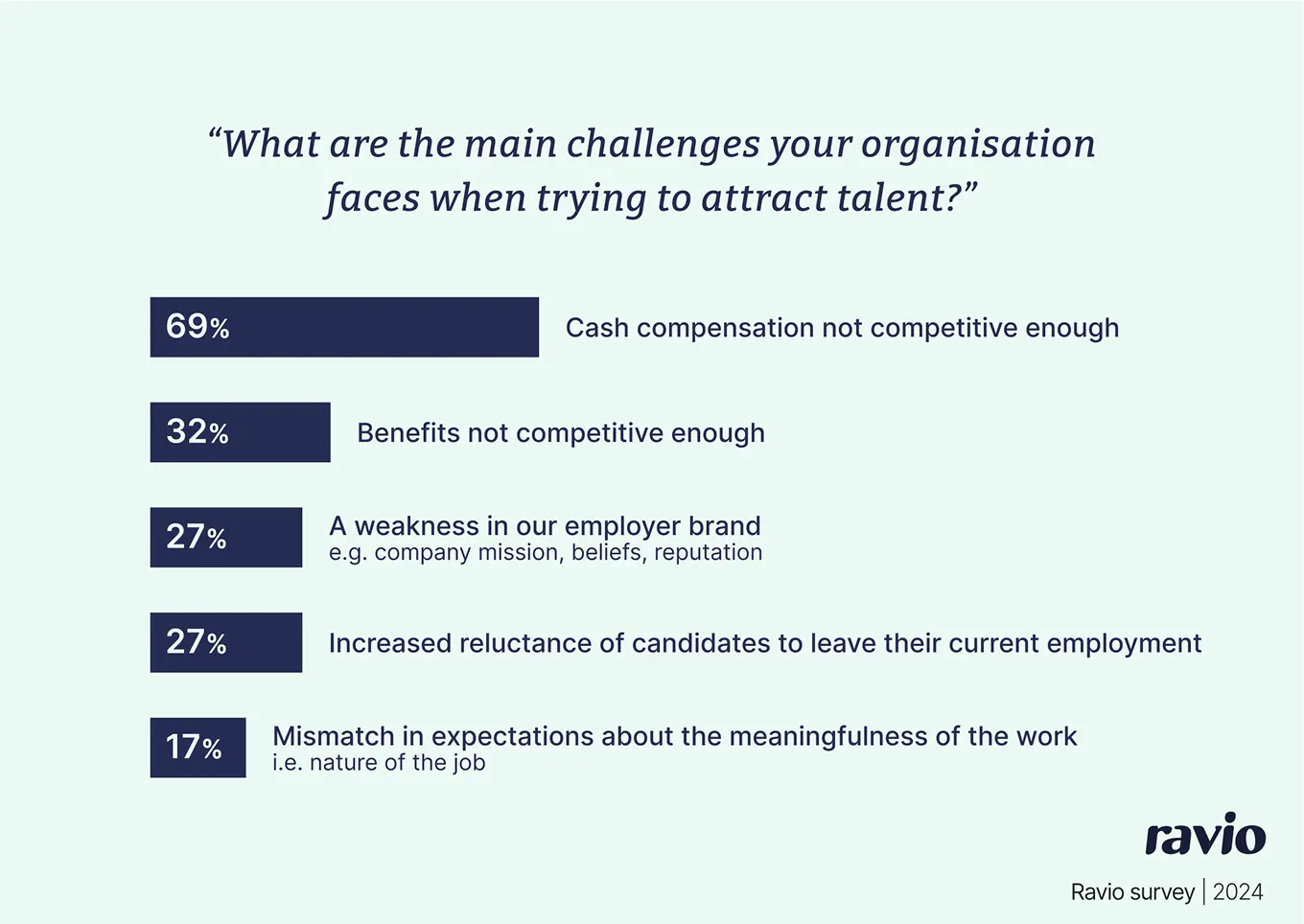
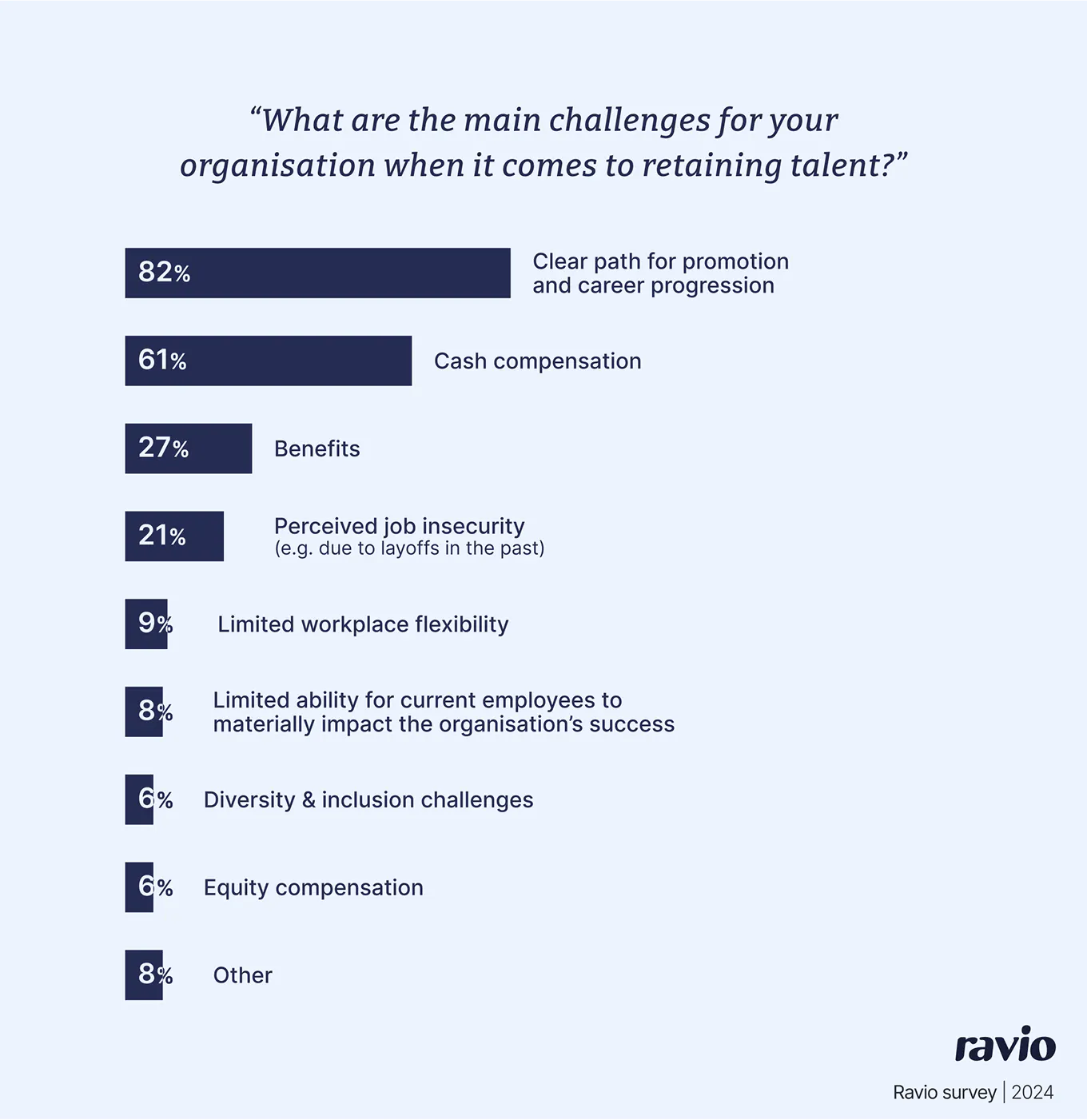
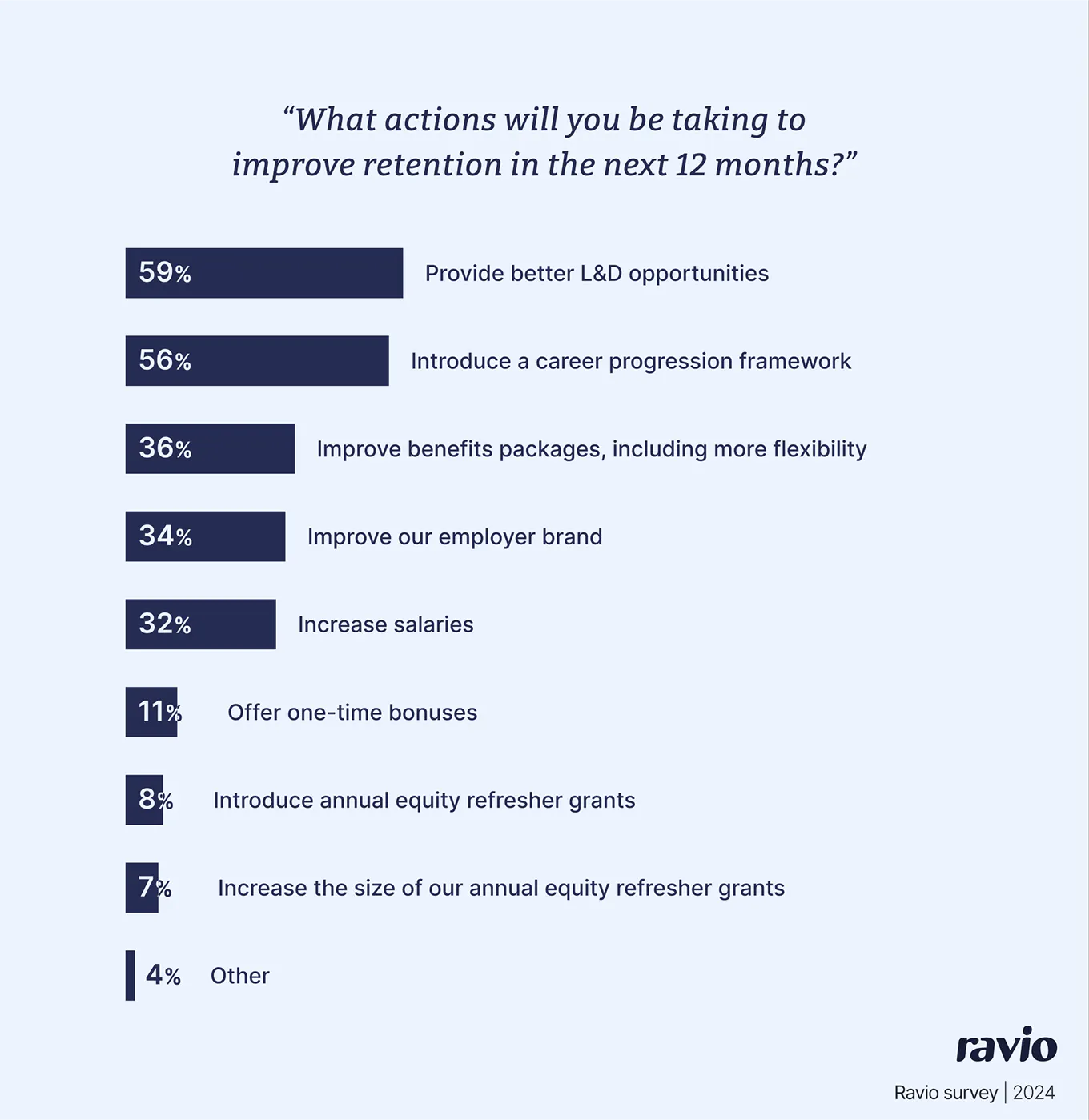
The importance of benefits is clear from Ravio’s latest compensation trends report.
32% of employers say their benefits package isn’t competitive enough when trying to attract talent – the second biggest challenge behind cash compensation.

When it comes to retaining talent, a similar issue exists.
27% of employers say benefits are the biggest challenge, behind promotion and cash compensation.

So it’s unsurprising that improving benefits packages is in the top priorities for improving retention in 2025 too.

At the same time, for employers the need to ensure compliance with mandatory benefits is also important due to legislative risk.
Here’s a summary of why employee benefits matter for organisations:
Designing an employee benefits package can be hard work – especially for global companies with employees working from different locations.
For People and Reward leaders, it means striking the right balance between market competitiveness, budget, company values, and legal compliance with local laws.
These factors will naturally change the overall benefits package that your organisation can offer.
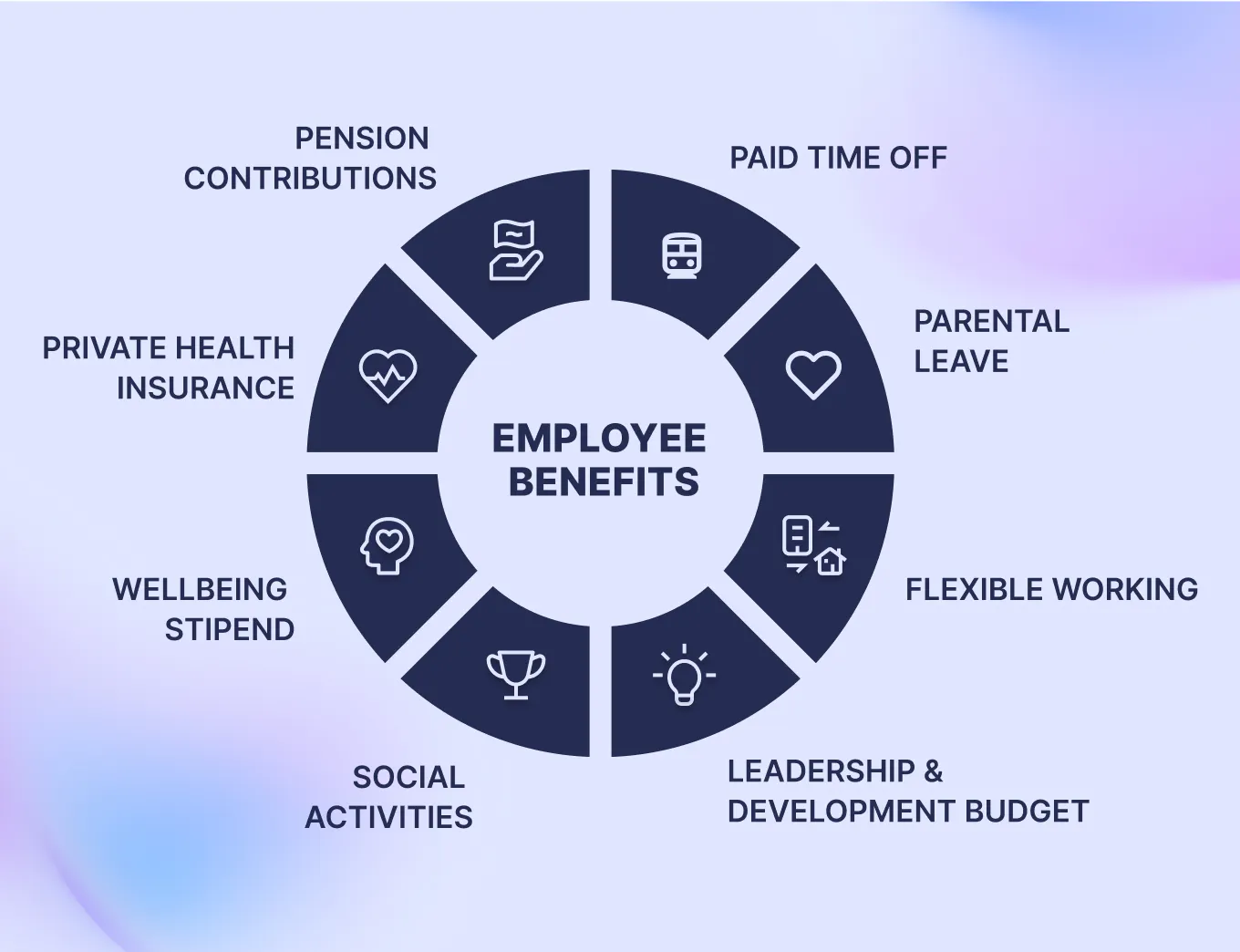
Generally speaking, employee benefits fall into three main categories:
"Take a holistic view of rewards, including your employee benefits package, and think about the behaviours you want to incentivise. Clear priorities and alignment are essential for success."

Chief People Officer at Ravio
Mandatory, or statutory, benefits are the legally required or essential provisions that provide employees with financial security and stability.
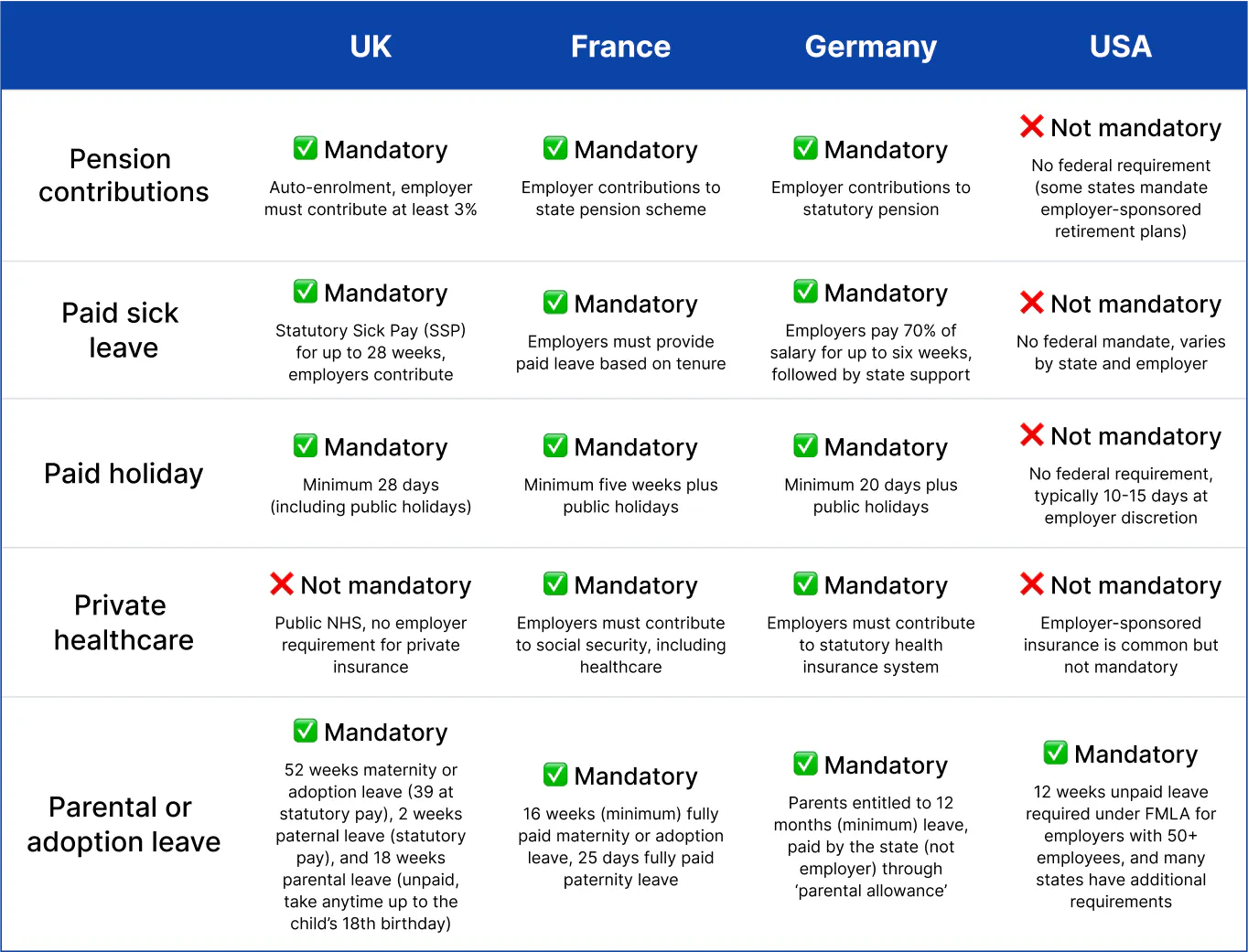
These vary by country, meaning that companies operating in multiple regions must ensure compliance with local labor laws. Here’s a snapshot of mandatory benefits across the UK, France, Germany and the USA.

Enhanced mandatory benefits go beyond legal requirements and are offered at an employer’s discretion to attract top talent and enhance the overall employee experience. Done right, these benefits can significantly impact job satisfaction, retention, and workplace culture.
Types of enhanced mandatory benefits include:
Additional benefits, or perks, are other benefits that enhance the employee experience, often more flexible or culture-driven.
Some examples include:

Employee benefits vary across Europe, influenced by local laws and the type of industry, size and budget they have.
Some, like parental leave, are legally required, while others, like learning and development (L&D) stipends, are offered competitively to attract talent.
Here’s a few examples of how parental leave requirements vary across Europe:
Unlike parental leave, learning and development benefits are not legally required – and typical approaches vary across different countries in Europe.
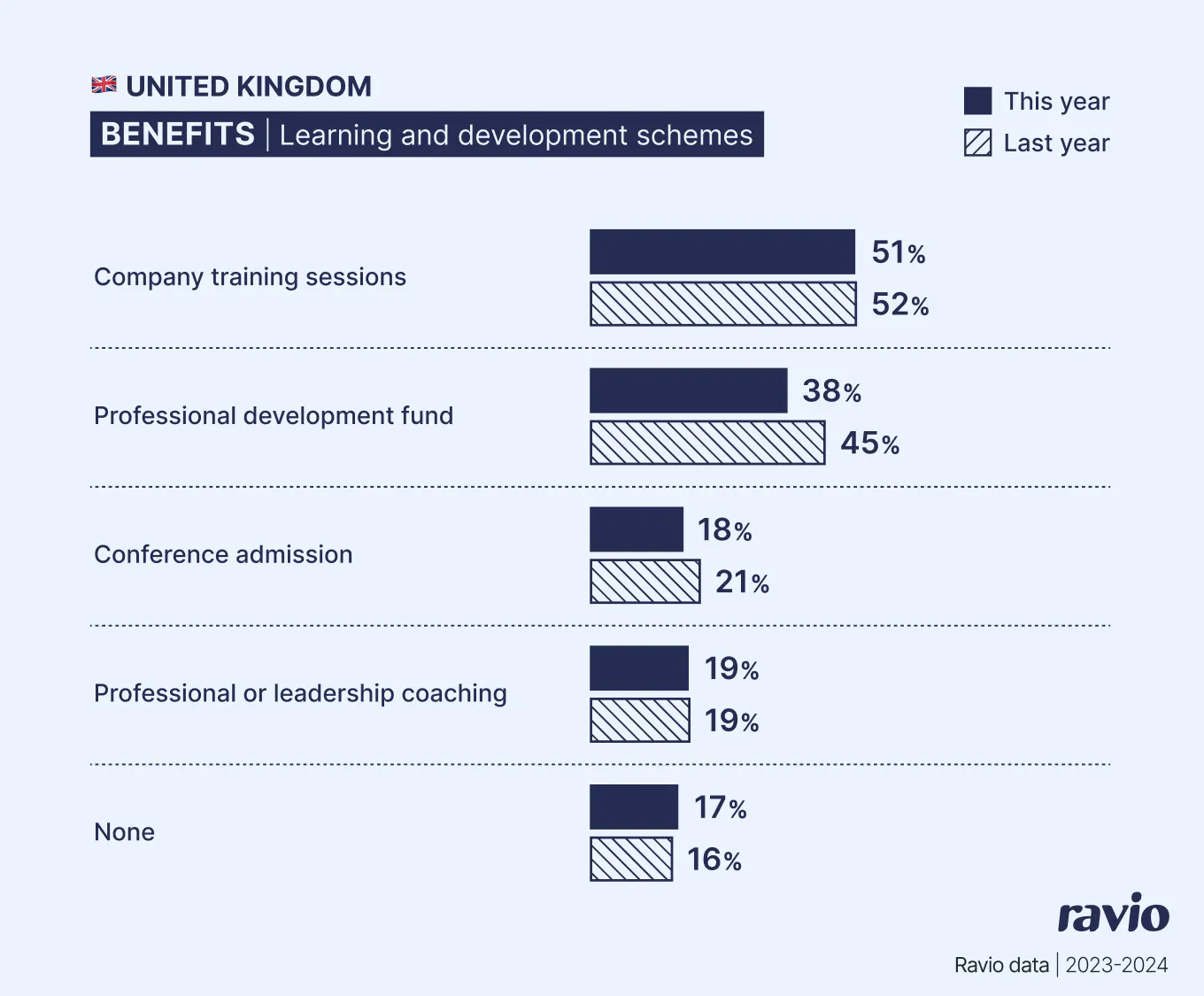
We can see from Ravio’s benchmarking data (2023-4) that in the UK the most common L&D offering is company training sessions. Notably, 17% of companies aren’t offering and L&D benefits, which is surprising given their value to employees.

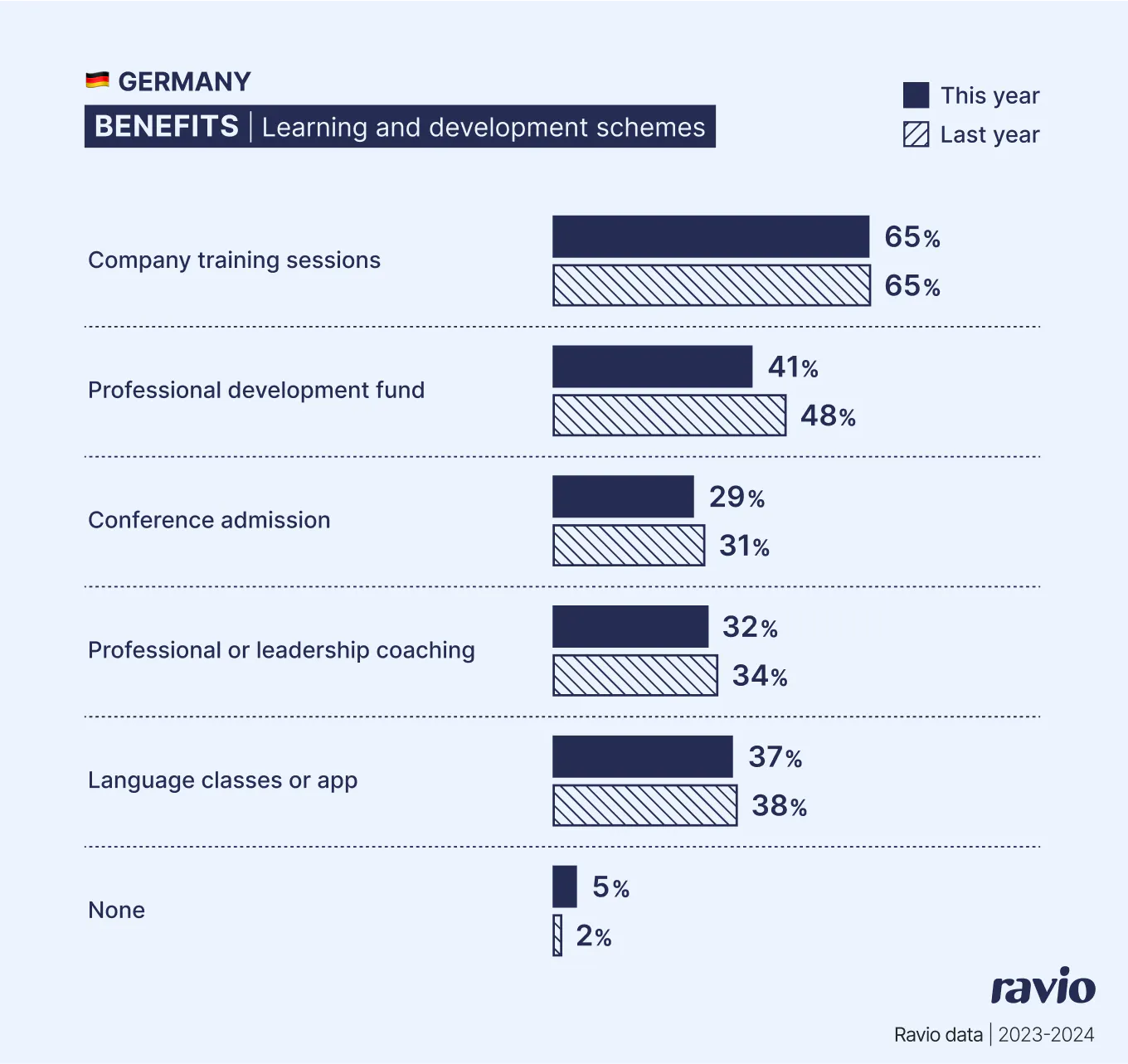
In Germany the majority of employers do offer some form of learning and development within their employee benefits package, with the most common being training sessions and a professional development budget for employees.

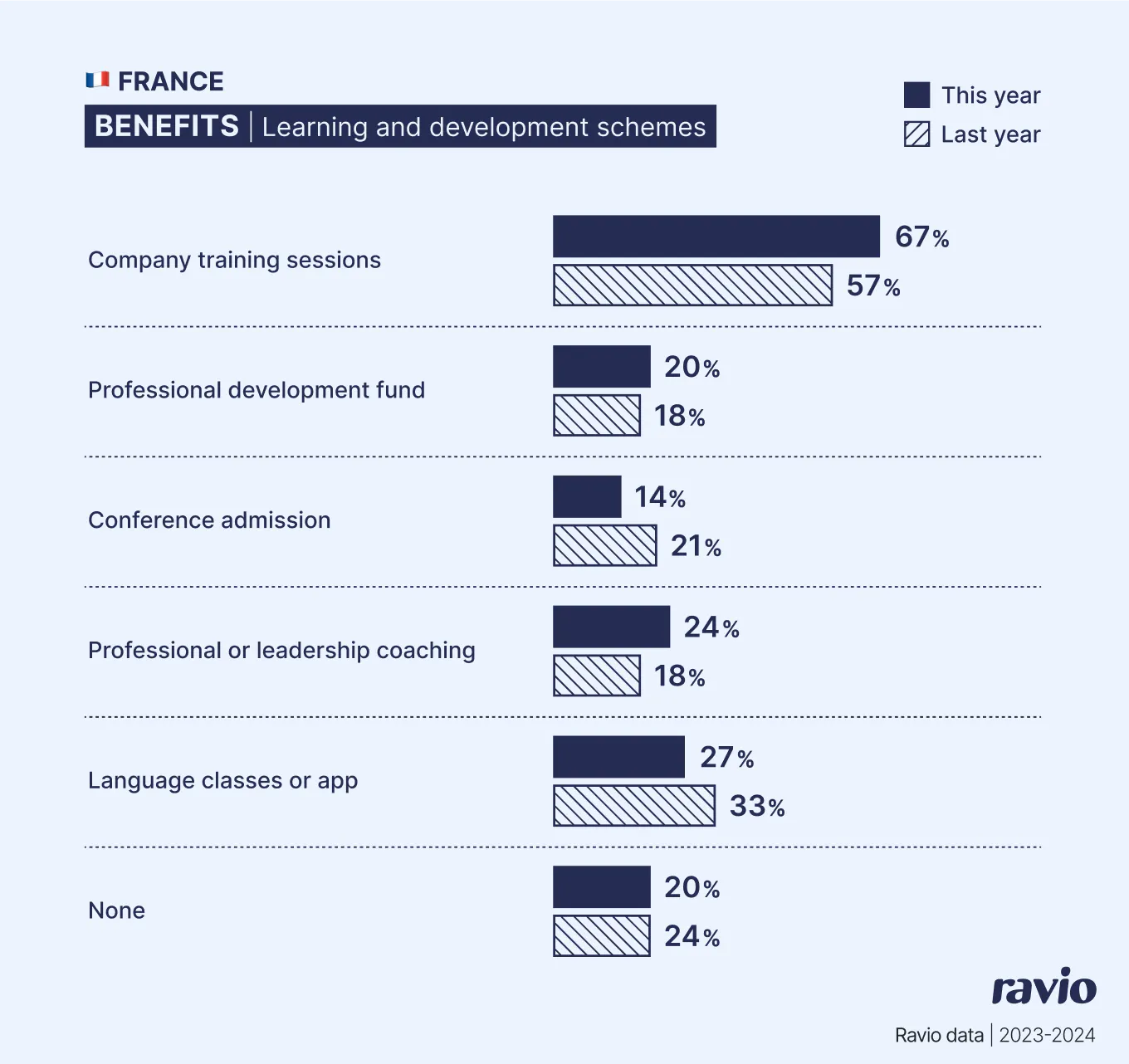
France leads the way when it comes to company training sessions, offering 67% of their employees company-wide training sessions.

Because every company approaches benefits differently, it can be tricky to know where to start.
There isn’t a map to follow, and designing a package for your company depends on a ton of different factors already outlined in this post.
To help, we spoke to Vaso Parisinou, CPO at Ravio to outline a step-by-step guide to building a competitive employee benefits package.
Before selecting benefits, it's crucial to clarify why your company is offering them.
A well-designed benefits package isn’t just about fun perks – it should be an intentional extension of your compensation philosophy, reinforcing your company's values, goals, and culture.
Start by asking:
To take one example, Wise’s mission is creating “money without borders”, and because of that they have shaped many of their employee benefits around flexible working and bringing global employees together.
"Your benefits strategy should be a direct reflection of your compensation philosophy. If your company prioritises transparency, that should show up in how benefits are structured and communicated. If you focus on attracting top talent, you may lean into market-leading benefits like generous parental leave or learning stipends."

Chief People Officer at Ravio
Once you’ve defined your objectives, the next step is determining how much to invest in employee benefits. Without clear budgeting, companies risk overspending on benefits employees don’t value or underinvesting in areas that could improve retention and engagement.
Some companies budget for benefits based on a percentage of base salary, allocating 15-25% of base salary to an employee benefits budget. For instance, if employee salaries total £5 million per year, and you allocate 20% of base salary for benefits, your benefits budget would be £1 million. Other companies budget based on a set cost per employee.
Whatever approach you take, the key is to balance the cost of benefits with the value they provide for employees.
For more advice on budgeting for employee benefits, head to the section below ‘How to budget for employee benefits’, where Vaso shares her experience.
The best employee benefits programmes are built with direct employee feedback.
Conduct surveys, focus groups, or one-on-one interviews to understand what employees truly value. While free lunches might appeal to some, others may prioritise learning and development stipends or enhanced parental leave.
In terms of overall shifts in what employees want from their benefits package, a recent Ciphr study found that in the UK the top benefits are:
A similar OnPay study for US employees found:
"As the demographic of your employee population changes, so too will your benefits package. Make sure you build a benefits package that scales appropriately – you can always add to it but it’s a lot more painful to cut down on benefits previously offered!”

Chief People Officer at Ravio
Use employee benefits benchmarking data to compare your offerings against industry norms.
This helps identify gaps in your benefits package and ensures that you remain competitive with companies in a similar growth stage, size, industry, and geography.
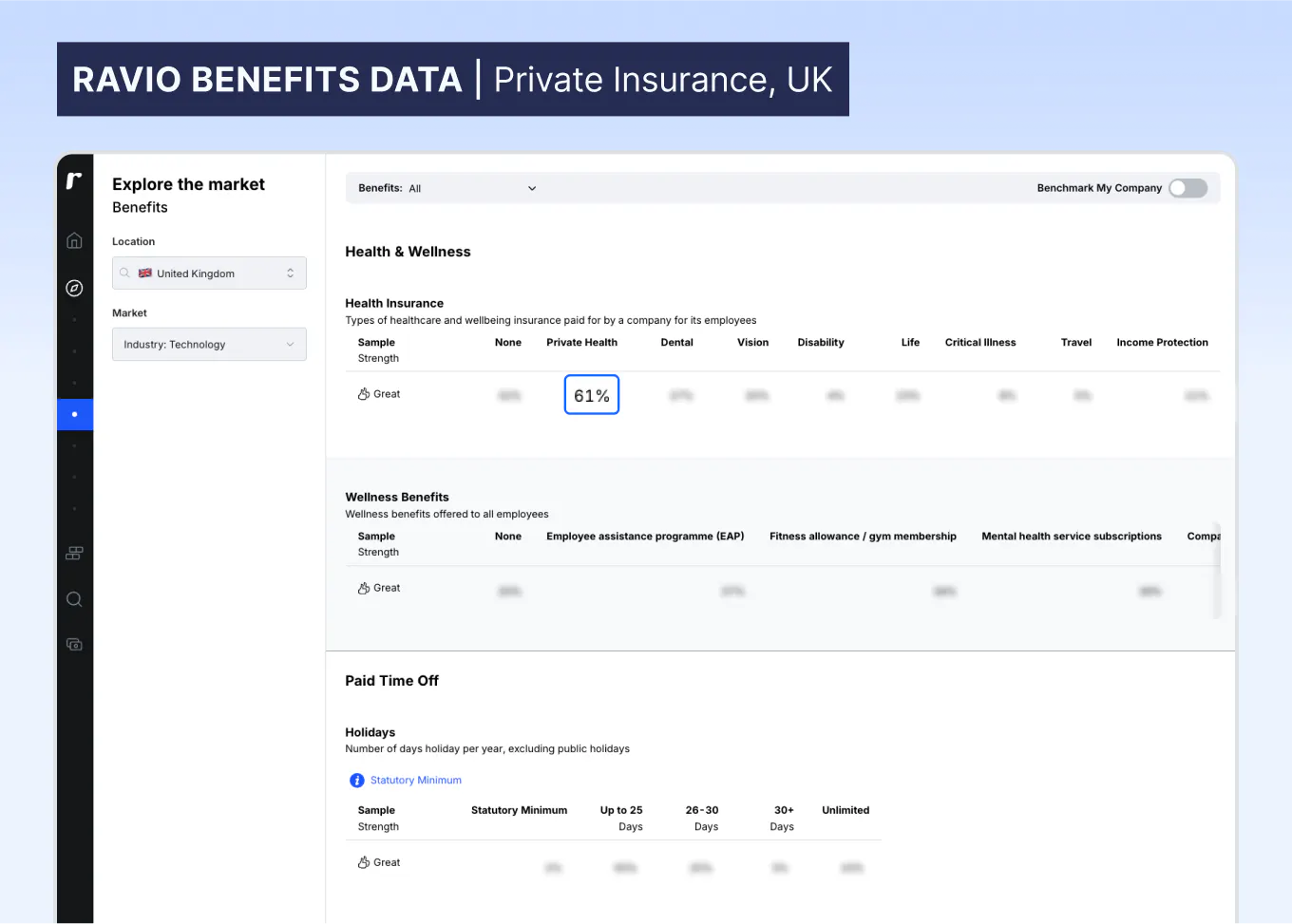
For example, if the data highlights that 61% of companies in your sector offer private health insurance but you don’t, you may be at a disadvantage in attracting top talent – as is the case in the UK tech industry based on Ravio’s data.

How do you decide which benefits to offer beyond the mandatory ones?
Vaso Parisinou, Chief People Officer at Ravio suggests aligning benefits with company values. For example, Ravio’s value of making compensation work for everyone is reflected in their benefits package which includes excellent pension contributions and parental leave policy – both above the statutory amount.
"I've seen companies offer all kinds of benefits – some that employees truly value and others that go unused. The key to getting it right is to stay true to what your organisation stands for. Your company values should be the North Star that guides your benefits strategy, ensuring they are meaningful, relevant, and aligned with the culture you want to build."

Chief People Officer at Ravio
A one-size-fits-all approach to benefits is outdated – different employees will value different benefits offerings.
So, when designing a competitive employee benefits package, offering flexible or personalised benefits can be a huge game-changer. This might be as simple as choosing how much to put away for retirement savings, or it could be choosing to opt in on childcare related benefits for people that might need it at that point in their life.
Netflix is a great example of flexibility and customisation in their benefits package, where they purposefully reflect their value of “almost no rules”, giving employees the freedom to choose when it comes to employee benefits. This ensures that the benefits that are used are the ones that people value most.
That said, Vaso does point out that this introduces quite a bit of administrative burden on companies – something that is important to be aware of, especially for early stage companies that might now have the manpower to support it, or for larger companies that are increasing headcount.
"Flexible benefits are a huge advantage for employees, but they come with operational cost. The more personalised options you offer, the harder they are to manage. It’s even trickier when administering benefits across different countries. The key is balance: offer enough choice to make benefits meaningful without overcomplicating administration. Start simple, scale smart.”

Chief People Officer at Ravio
Even the best benefits package will fall flat if employees don’t know what’s available to them or how to use it. Simply mentioning benefits during onboarding isn’t enough – employees forget, overlook details, or may not see the immediate relevance.
To help combat this, companies need clear, ongoing communication when it comes to employee benefits. Ensure you:
Employee benefits aren’t static, they need to evolve with shifting workplace expectations, market trends, and employee needs. What was valuable five years ago is likely to be irrelevant today.
Keeping your benefits package competitive and meaningful means reviewing and iterating on it annually – with three key elements in the review process.
Firstly, market benchmarking.
Access to reliable employee benefits benchmarking data is vital to understand market trends and take that into account when improving your benefits provisions. For example, commuting benefits before the pandemic were highly valued, whereas now flexible working policies have taken priority.
Secondly, employee feedback.
It’s important to regularly ask employees for feedback to understand which benefits are being used, which aren’t, and where new needs are emerging.
But remember that if a benefit has low engagement, it doesn’t necessarily mean it should be scrapped, it could just need better communication.
A good example is pension schemes. Younger employees often don’t see the value in being able to increase how much of their salary goes into retirement savings now, but it’s very much in their best interest to do this – so financial education is needed, rather than removing additional pension contributions.
And finally, societal shifts.
For Vaso, industry and cultural context plays an important role when reviewing and improving benefits. Take parental leave, for instance.
“Parental leave expectations have changed drastically over the years,” says Vaso, “There was a time when statutory paternity leave – just two weeks in many countries – was the norm and no one would have thought to ask for more. Today that just wouldn’t fly. If you’re trying to attract younger employees who are thinking about starting a family, offering only the minimum could put you at a serious disadvantage."
Without proper planning, companies risk overspending on benefits that employees don’t use or underspending in areas that could improve retention and engagement.
We asked Vaso Parisinou, Chief People Officer at Ravio, for her advice on how to budget for employee benefits effectively.
Before making any decisions about new benefits, analyse existing cost and usage. This means calculating the average cost of benefits per employee overall, as well as reviewing data on historical expenses submitted for optional benefits like wellness stipends or health insurance.
This will help you identify any benefits that are high-cost but low-use, making them candidates for being replaced, removed, or better communicated.
💡 Vaso’s tip:
"Your workforce will evolve, and so will their needs. A benefit that made sense at 50 employees might not work at 500. Keep reviewing your benefits to ensure they stay relevant."
Not all benefits are created equal. Some are essential for compliance and competitiveness, while others are discretionary perks.
Structuring benefits into tiers ensures budget allocation reflects both aspects in terms of required spend for legal compliance, and additional spend for other benefits to enhance employee total compensation.
For instance, your tiers might look like this:
💡 Vaso’s tip:
"It’s really hard to take benefits away once they’ve been introduced. Instead of rolling out an extensive package from day one, start with a strong core set of benefits and build from there. Future-proofing your benefits strategy means designing something that can scale, not something that will become a financial burden."
Companies should establish a clear budget framework that balances financial sustainability with employee expectations.
One common approach is to budget for benefits based on a percentage of base salary, allocating 15-25% of base salary to an employee benefits budget. For instance, if employee salaries total £5 million per year, and you allocate 20% of base salary for benefits, your benefits budget would be £1 million. Other companies budget based on a set cost per employee.
Access to benefits benchmarking data from a provider like Ravio is important here to help you understand what a typical employee benefits package is for companies of your size and stage.
💡 Vaso’s tip:
"Before locking in a benefits budget, ask yourself: how do benefits fit into your broader compensation philosophy? Are you prioritising high base salaries, or are benefits a core part of your attraction and retention strategy? The answer will shape your approach."
There are several ways to optimise benefits spend without reducing quality, including:
💡 Vaso’s tip:
"Your benefits budget is not just about what you spend – it’s about how smartly you spend it. Regularly review your providers, negotiate better rates, and explore flexible options to ensure maximum value for your employees."
Failing to account for inflation and workforce expansion can result in budget shortfalls over time.
💡 Vaso’s tip:
"Benefits planning isn’t just about today – it’s about where your company will be in 2, 3, or even 5 years. Always think long-term. A benefits package should be scalable, adaptable, and sustainable.”
Many companies today – especially in tech – offer core benefits like private healthcare, pension contributions, and paid time off. These have become standard across industries. However, the benefits that differentiate an employer’s benefits package can often be the ones that go beyond the basics to attract, retain, and support their workforce.
From unlimited paid leave at Netflix to fully funded tuition at Amazon, we’ve highlighted companies that offer unique and standout benefits, giving a snapshot of what makes each package distinct.
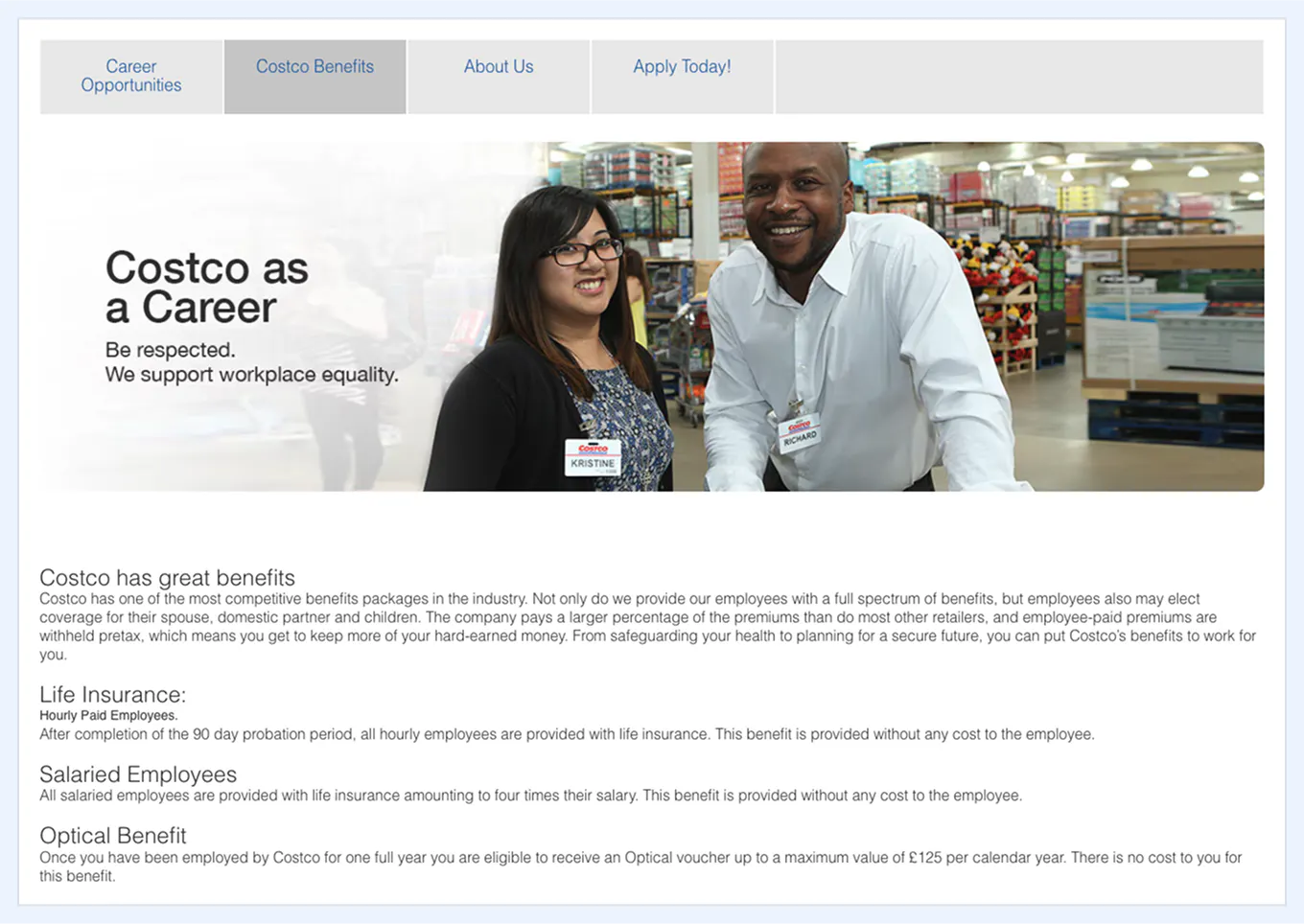
Costco offers a comprehensive list of employee benefits, offering private healthcare, pension contributions, and paid time off as well as additional, optional benefits and perks. Costco also states on their website to have an emphasis on affordability, reflecting its own value as a retailer, by paying a larger percentage of the premiums that most other retailers do for their employees.
What makes Costco employee benefits unique?

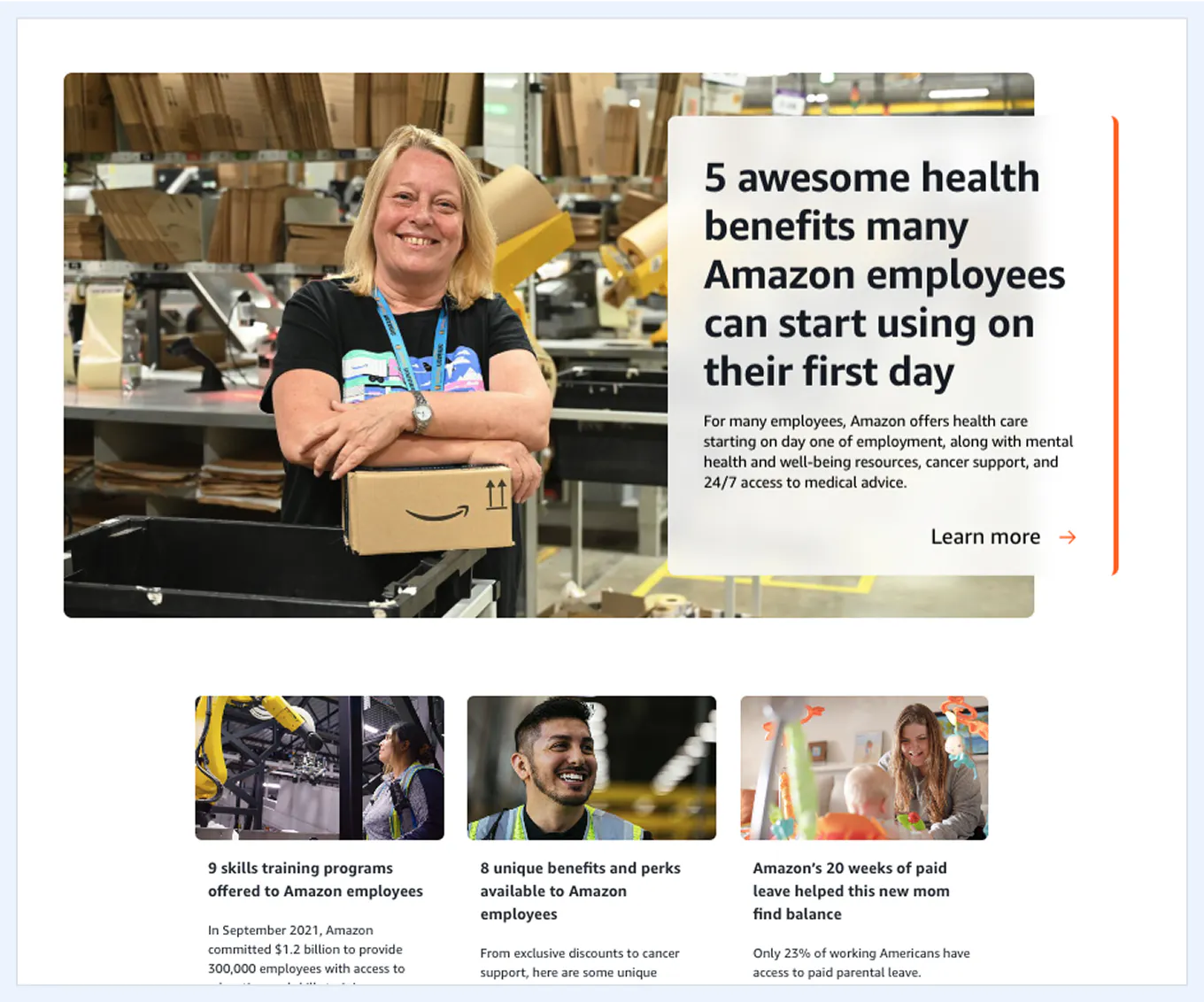
Amazon provides private healthcare, pension contributions, parental leave, with benefits that also help career progression and education. Here’s a snapshot of Amazon’s employee benefits.
What makes Amazon employee benefits unique?

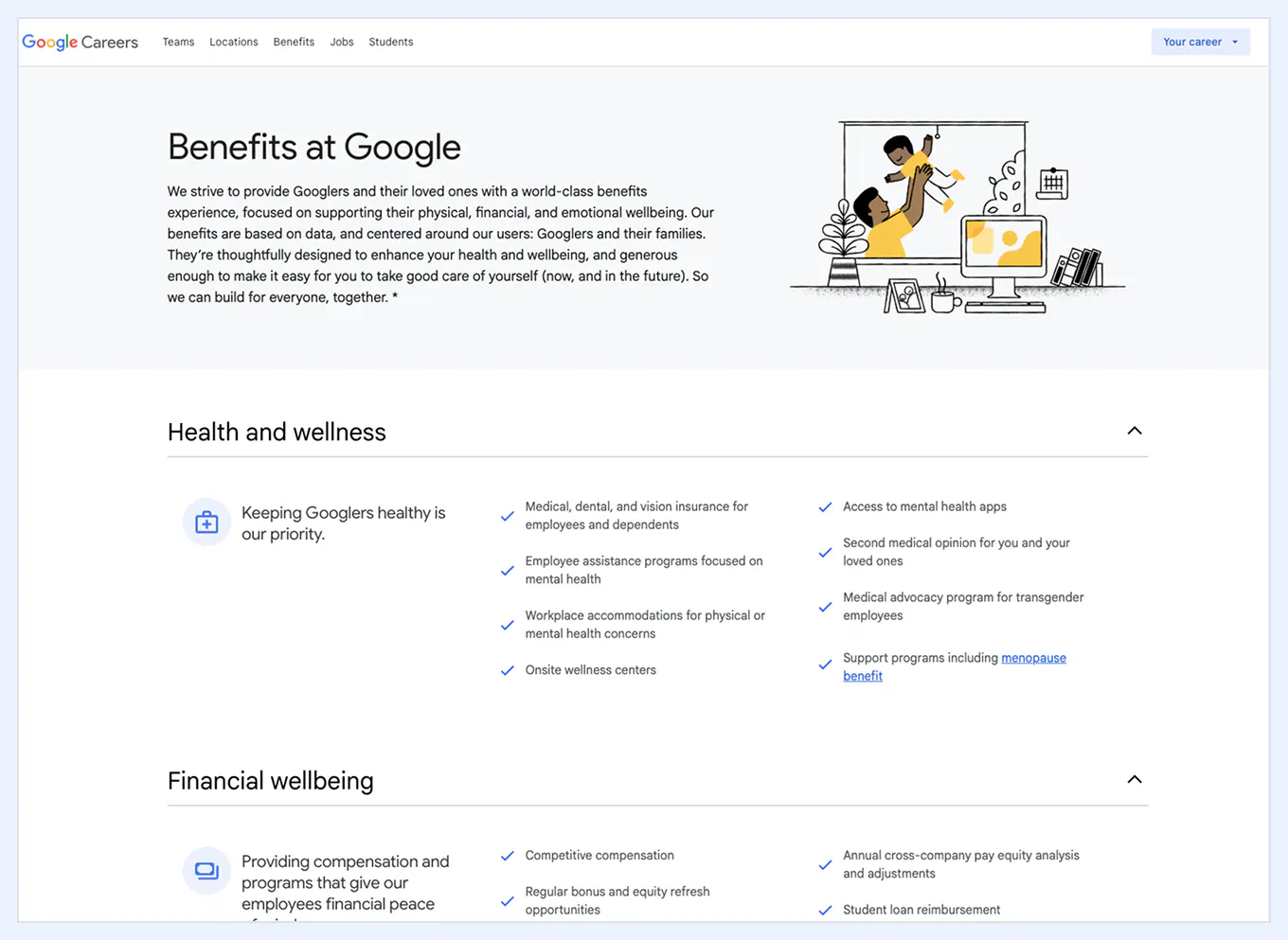
Google offers private healthcare, pensions, and paid leave, but what sets it apart is its top-tier perks and flexible work culture.
What makes Google employee benefits unique?

Netflix is famous for its “almost no rules” work culture, and its employee benefits reflect this. From unlimited parental leave and PTO to an unstructured workday, Netflix aims to reinvent employee benefits. Here’s a snapshot of a few benefits they offer.
What makes Netflix employee benefits unique?
Apple provides private healthcare, pensions, and time off amongst other benefits. Here’s a few that stand out.
What makes Apple employee benefits unique?
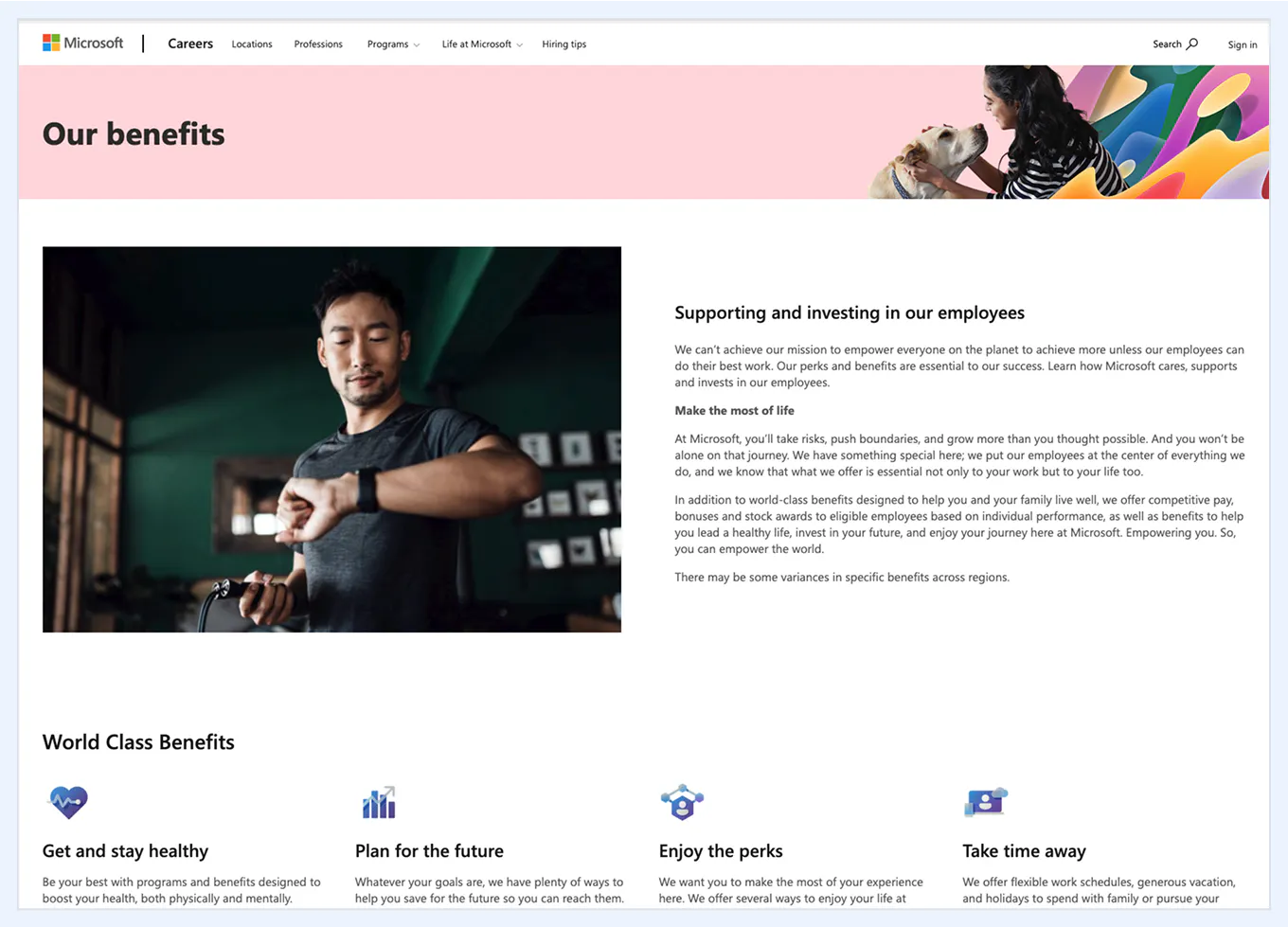
Microsoft provides private healthcare, pensions, and parental leave, but places extra emphasis on flexible time off and mental health support. Here’s a snapshot on benefits offered at Microsoft:
What makes Microsoft employee benefits unique?

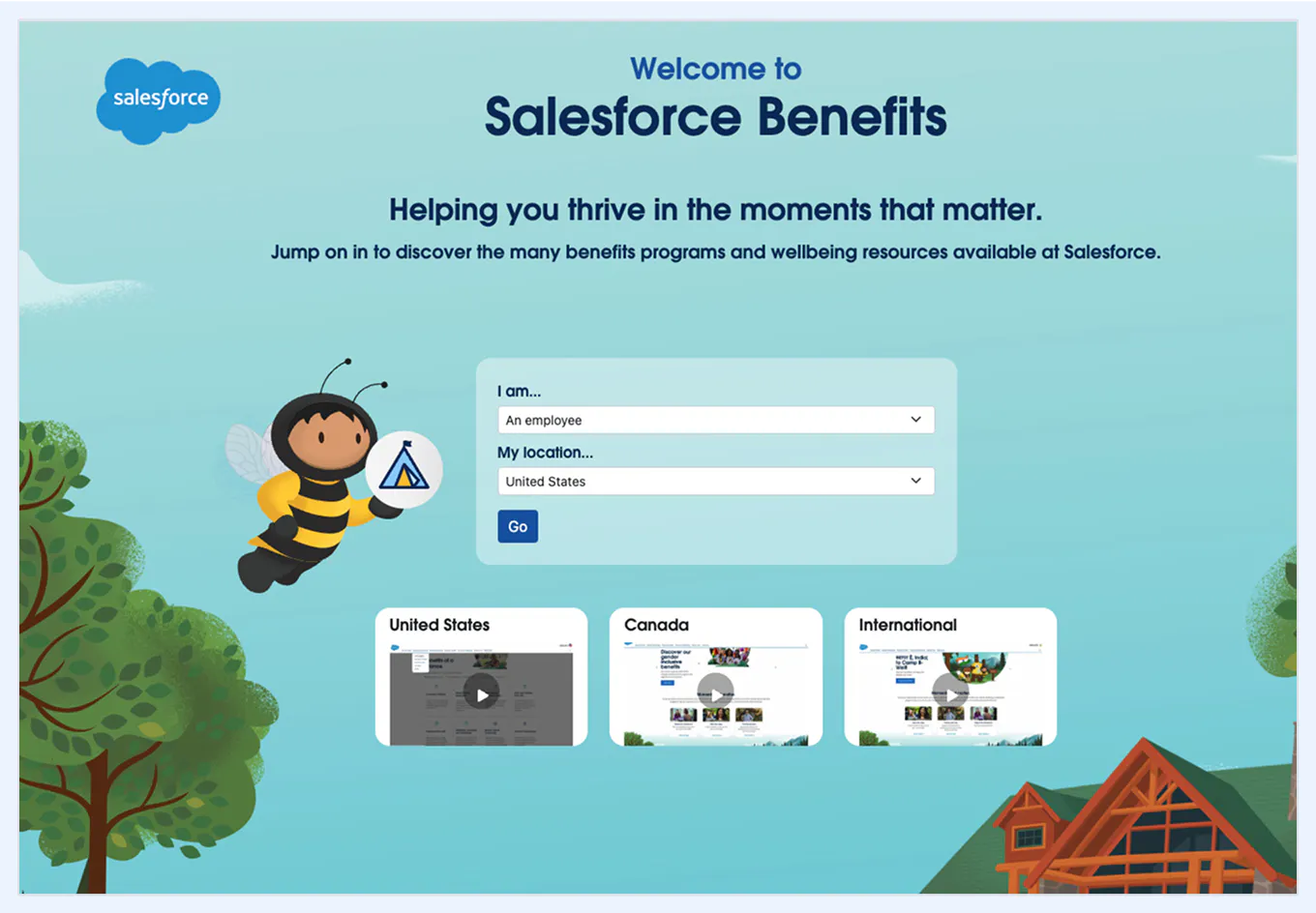
Salesforce’s employee benefits are highly competitive. Here’s a snapshot of what’s on offer:
What makes Salesforce’s employee benefits unique?

Your monthly dose of market insights and expert perspectives

Personalised benefits allow employees to select the employee benefits package that best suit their individual needs and circumstances, from a range of benefits choices available.

85% of UK tech companies offer hybrid working models. See the latest data on remote, hybrid, and in-office models across Europe – and advice on how to decide what's right for your team.

What is a competitive employee benefits package in France? Ravio data on the benefits French companies typically offer, with advice from experts at Skeelz and May.