
Compensation strategy
10 best compensation planning software, compared (2026)
Compare the best compensation planning software in 2026. Learn what to look for, compare leading platforms, and choose the right solution for your organisation.

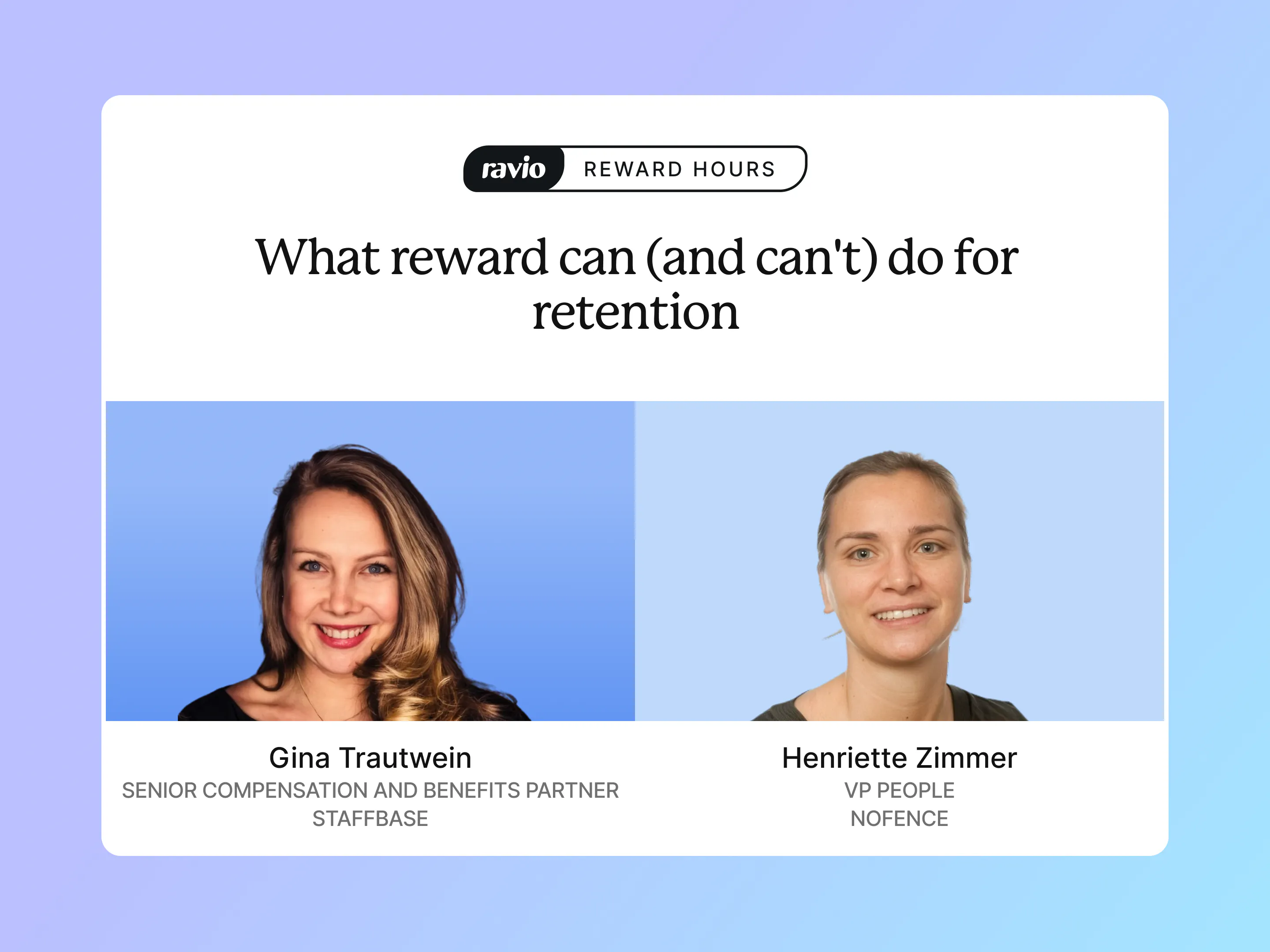
Attrition rarely gives you much warning. A resignation letter lands with a competing offer – and by the time it lands on Reward's desk with a manager asking what’s possible, it’s almost always too late.
Henriette and Gina have both had to make these calls in practice – deciding what retention spend is actually for, working out who's at risk before it's too late, and having the conversations that don't always go to plan.
This session covered:
If you're more of a reader than a watcher, here are a few of the most interesting insights from Henriette and Gina's discussion on what reward can and can't do for retention.
Compensation tends to be the first thing that surfaces in conversation when someone is at risk of leaving. It’s easy to point to and it gives everyone a tangible thing to solve.
But for most cases it’s sitting on top of something else – a difficult manager relationship, a role that no longer fits, a sense that growth has stalled.
A pay adjustment works when two things are true at the same time: the issue really is about compensation, and everything else is broadly fine.
When it is something else, the adjustment tends to delay the inevitable. They’ll leave within 6 to 12 months anyway – and in the meantime, you may have created a new pay equity problem while trying to solve the old one.
💡 Practical application: Before making any retention adjustment, run through three questions: is the manager relationship working, does the person still feel like they're growing, and is the role still a good fit? If the honest answer to any of those is no, the pay decision still needs to happen – but so does something else alongside it.
By the time a retention risk reaches a reward team or a people partner, it's usually arrived with an offer letter for a role elsewhere.
That's the worst possible moment to make a good, objective decision. So, finding the risk earlier is what makes it possible for reward to step in effectively.
The earliest signal almost always sits with the direct manager. They’re the one who sees the day-to-day work, hears the frustrations, is trusted with progression goals, and so on.
Which means the frameworks, the language, the tools for having these conversations all need to be in managers' hands – not locked centrally in total rewards. That means focusing on conversation guides, merit cycle support, total rewards overviews managers feel actually able to explain, and training on how to surface and respond to risk early.
But, there is one caveat: all of this only works if the manager-employee relationship is strong. Where that bond hasn't formed – like a new manager who hasn't yet built trust with their team – risk often never surfaces at all until it's too late.
One of the more expensive retention mistakes is promotion.
Often, when a manager is scared to lose someone, they’ll reach for promotion. It feels like a win in the moment. But, if that person isn’t truly ready for the next level, then it can actually raise that person's market credibility faster than their readiness – making it easier, not harder, for them to leave.
Gina shared an example: someone promoted three times in two years, largely through persistent pressure due to retention risk at a point when the promotion process wasn't robust enough for the reward team to push back. On paper, it looked like a successful retention. But in practice, the company had elevated someone beyond their preparation, created confusion about what promotion actually meant across the business, and never built the emotional bond to the company that would make them loyal long-term.
💡 Practical application: Readiness-based promotion criteria, transparent timelines, and predictable windows are a must to ensure every promotion case is defensible.
Design your retention philosophy, your pay frameworks, your promotion criteria, and your risk escalation process when you're not under pressure – decisions made reactively are almost always less consistent and harder to defend than ones made from a position of calm.
That means knowing which roles you can't afford to lose before a competing offer arrives. It means having a documented approach to retention bonuses that pairs the payment with a real risk mitigation plan. It means regularly running a succession planning process. And it means ensuring total rewards is communicated properly and understood widely, so that employees weighing up a counteroffer are making a complete comparison.
Having these structures in place won't prevent every departure, but it means fewer scrambled decisions and more equitable outcomes.
💡 Practical application: Map your critical roles now, before anyone hands in notice. For each one, ask whether the person in it is market-competitive, whether their manager relationship is strong, and whether there's a succession plan in place if they left tomorrow. That list should be a standing agenda item in your review process, to help move retention from reactive to proactive.
Your monthly dose of market insights and expert perspectives
Compare the best compensation planning software in 2026. Learn what to look for, compare leading platforms, and choose the right solution for your organisation.

Learn what compensation management software does, when you need it, and how it helps teams make fair, defensible pay decisions at scale.

The best compensation management software gives you tools for real-time benchmarking, salary bands, compensation reviews, and pay equity compliance. See how top platforms compare in 2026.

