
Compensation strategy
10 best compensation planning software, compared (2026)
Compare the best compensation planning software in 2026. Learn what to look for, compare leading platforms, and choose the right solution for your organisation.

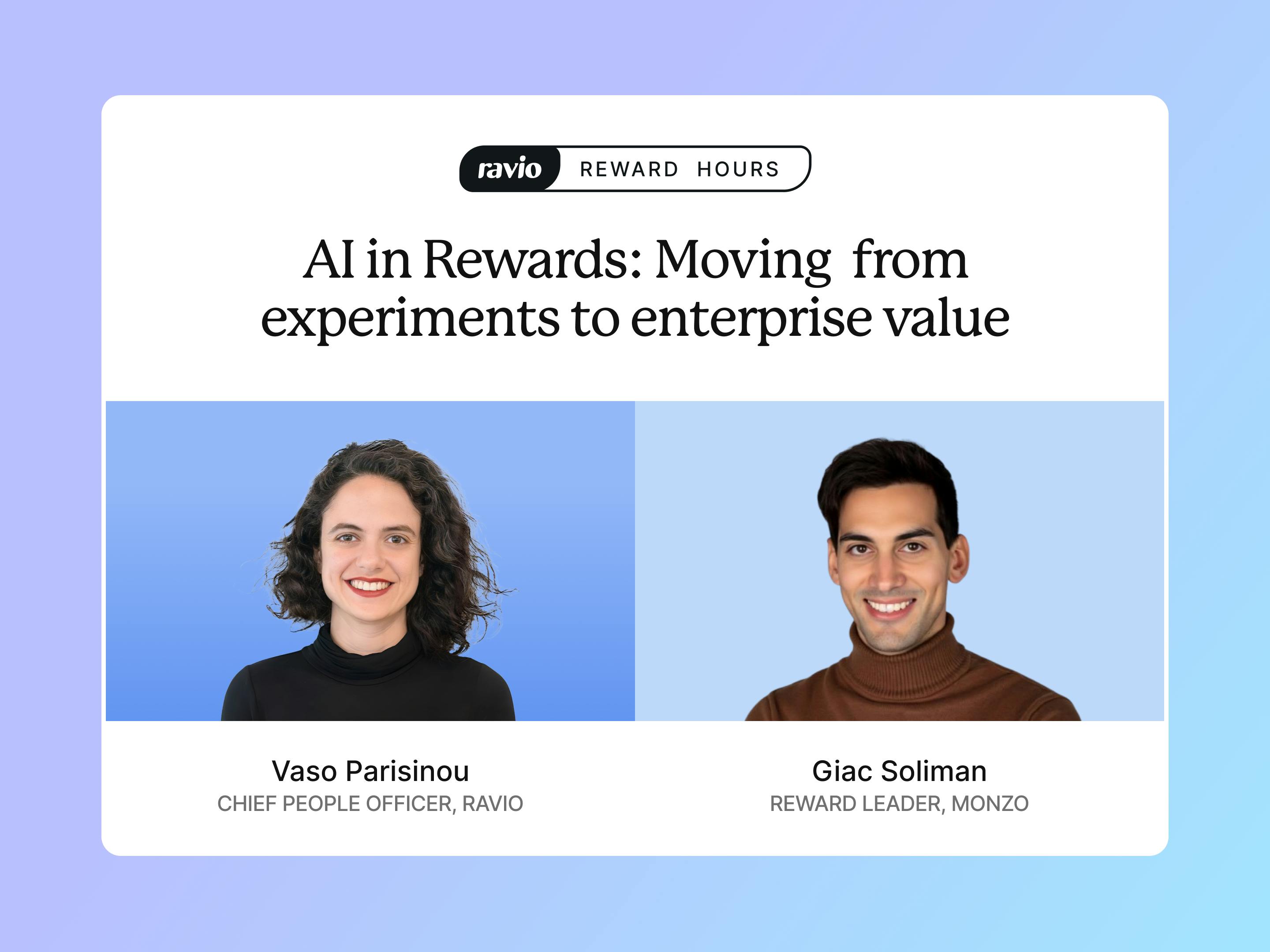
AI is no longer a buzzword. It's already transforming how Reward teams work – from analysing data, to designing level frameworks, to drafting employee comms.
But with so much change so quickly, it's easy to feel behind. We know we need AI in our processes, but where do we even start? Which tools actually matter for Reward leaders? The possibilities feel endless.
In this month's Reward Community Office Hour, Giac Soliman joined Ravio’s Chief People Officer, Vaso Parisinou, to discuss how AI can be practically applied in Rewards, and what skills Reward professionals need to build (or buy) as AI adoption increases.
The discussion included:
If you're more of a reader than a watcher, here's a few of the most interesting insights from Vaso and Giac's discussion on AI in Reward.
People often over-trust AI vendor claims about automating complex compensation processes. The real skill is not mastering AI coding but becoming a skeptic operator who can question outputs, identify flaws, and understand where automation makes sense – and where it doesn’t.
A second essential mindset is continuous learning. AI evolves rapidly, and comfort comes through curiosity, not formal training. By experimenting with AI in small, low-stakes, personal contexts, Reward professionals can build intuition about how it behaves before applying it to critical business areas.
AI now automates data analysis and reporting, shifting the real challenge to human judgment – knowing how to balance data patterns, analytics, and business context when making decisions.
Teams that demonstrate sound judgment about where AI adds value (and what risks need managing) are becoming indispensable across HR.
💡 Practical application: Keep a “judgment log” of difficult Reward decisions and your reasoning. Create prompts that challenge your assumptions rather than simply confirming them.
Responsible AI adoption requires structure, discipline, and an emphasis on safety before scale.
Giac outlined a five step framework for Reward teams to follow:
This approach encourages teams to focus on understanding AI’s behaviour before relying on it, ensuring that ethical and operational safeguards evolve alongside capability.
Strong partnerships with IT and Legal are fundamental to safe AI adoption. Using personal AI accounts for reward data can expose sensitive information and breach privacy laws. Corporate AI licenses, data governance, and audit trails are critical safeguards.
As Giac put it: “Data security and governance may not be exciting, but they are absolutely essential.”
Your monthly dose of market insights and expert perspectives
Compare the best compensation planning software in 2026. Learn what to look for, compare leading platforms, and choose the right solution for your organisation.

Learn what compensation management software does, when you need it, and how it helps teams make fair, defensible pay decisions at scale.

The best compensation management software gives you tools for real-time benchmarking, salary bands, compensation reviews, and pay equity compliance. See how top platforms compare in 2026.

