
Equity
Equity compensation: a complete guide for startups
How do startups structure equity compensation? This guide covers everything from vehicle types, vesting, tax, grant values, and how to decide what's right for your company.

Equity is one of the most powerful levers in your compensation toolkit – giving employees a genuine stake in what they're building supports both hiring and long-term motivation and retention goals.
But equity plans are also one of the hardest to design.
Unlike salaries, there's no straightforward benchmark for a well-designed, competitive employee equity plan. Different companies have very different approaches, and grant value varies enormously depending on instrument, valuation, and strike price. Plus, there are lots of opinions to contend with from leadership, finance, legal, and investor stakeholders. And if employees don't understand what they have, the motivational value is lost entirely.
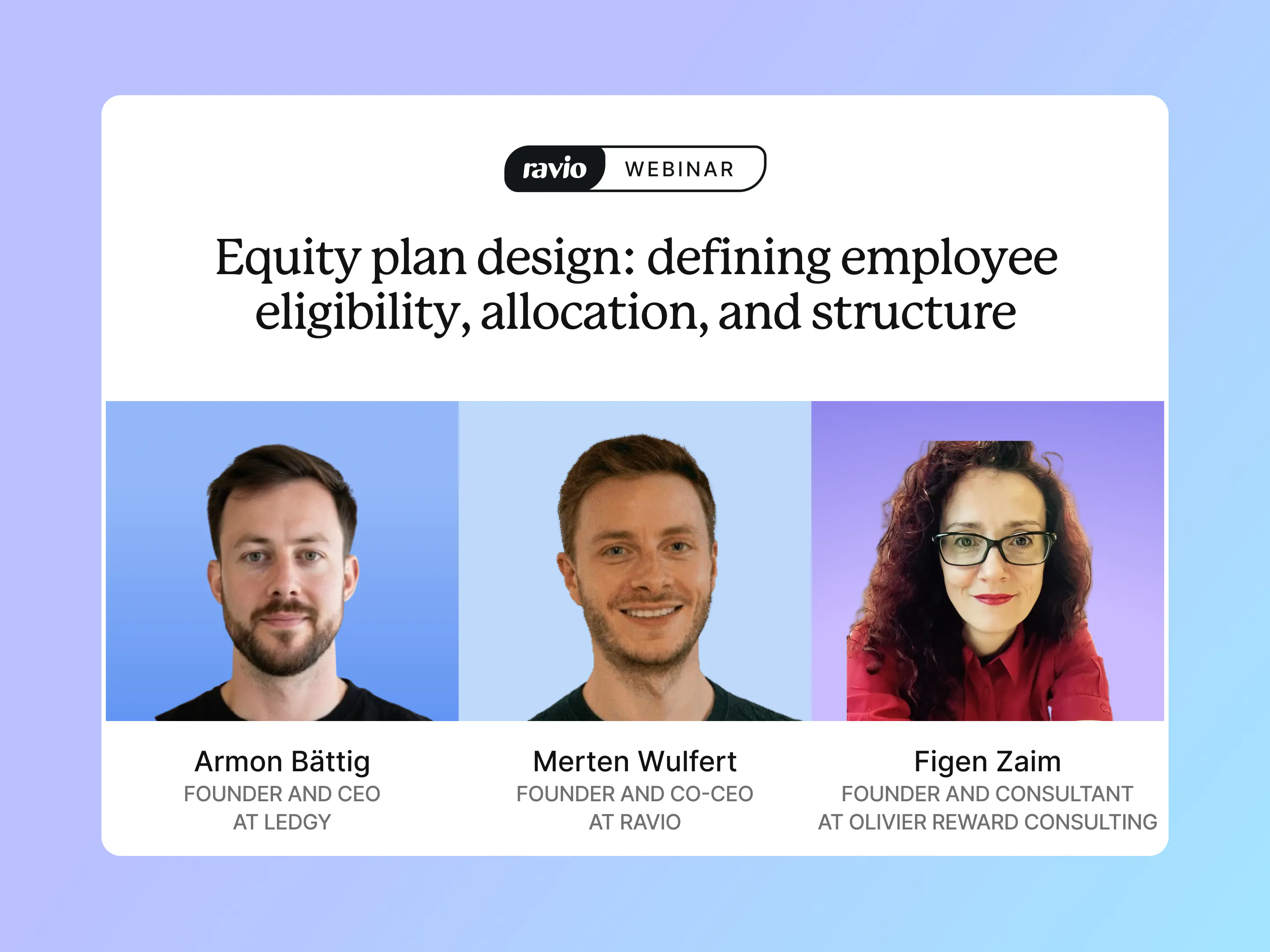
In this session, we brang together data from Ravio's 2026 Compensation Trends report and Ledgy's State of Equity 2026 report to see how companies are approaching equity design in 2026 – and sharing experiences on what separates plans that work from those that don't.
We covered:
As always, there'll be plenty of opportunity to ask questions, share experiences, and learn from peers on how best to approach equity design.
Our live poll found that only 10% of attendees described their equity framework as "very structured." The rest were split between "somewhat structured" and "no real structure at all."
Armon's take: some discretion is healthy. A strong philosophy matters more than a rigid rulebook. The risk to avoid is inconsistency: two people in similar situations being treated very differently is where things go wrong.
Figen added the company lifecycle lens: early-stage companies need flexibility; companies approaching exit need definition. "Winging it" and "having no structure" aren't the same thing.
When clients come to Figen with no equity framework, her answer is always the same: begin with compensation philosophy. What are you trying to achieve? Are you building something where everyone has skin in the game, or targeting a small group of senior leaders? Only then does the conversation turn to mechanics.
Armon's framing: keep it simple early on, then formalise as you approach a funding round or exit. The mistake is building a complex plan too early – or arriving at a corporate action without the plan being properly consolidated.
💡 Practical application: Before designing any equity structure, map out where your company is likely to be in three years. That single exercise will tell you how much formality you actually need right now.
Ravio data shows a 16% improvement in the UK this year in the proportion of companies granting equity to all employees. Progress – but there's still a long way to go.
The familiar counter-arguments for keeping equity only for senior roles – low equity literacy at junior levels, small grant sizes, shorter tenures – didn't hold up well in the room. Educating employees on equity is the employer's responsibility, not a reason to exclude people. A small grant isn't meaningless; it's a signal that someone is part of the organisation's story.
The option pool, though, is a real constraint. When headroom is limited, you sometimes have to choose between something meaningful for a few or something small for many – and it's always worth making that choice deliberately rather than by default.
Ledgy data shows a significant gap in equity participation between men and women.
The 2025 figures showed a 21% gap; the latest data has brought that to 15 points. Progress, but far from resolved. The EU Pay Transparency Directive is beginning to push long-term incentives into scope, which could start to surface these gaps more formally.
Compressed valuations were also discussed as a real issue today: what do you do when options were granted at a £100m valuation and the company is now worth £20m?
Options discussed include cash compensation for the loss of value, refresher grants at current fair market value, and increasing the option pool to create headroom.
The worst outcome is doing nothing and letting options lapse. These situations usually need a board-level conversation where the exercise price, pool size, and overall strategy are revisited together.
Your monthly dose of market insights and expert perspectives
How do startups structure equity compensation? This guide covers everything from vehicle types, vesting, tax, grant values, and how to decide what's right for your company.

Equity refresh grants give additional equity to employees who received equity compensation when joining a company. They can be a great employee retention strategy.

How is executive equity compensation typically structured? Here’s Ravio and Erevena's data on vehicles, vesting, and how equity shifts by company stage

