Norway is widely recognised as one of the world's most gender-equal nations, consistently ranking among the top countries for workplace equality. For decades, the country has maintained a culture of transparency around salaries, with citizens able to access tax information publicly since 2001.
Yet despite this long-standing openness, Norway's gender pay gap remains stubborn at around 12%, with little improvement in recent years.
This is where the EU Pay Transparency Directive (Likelønnsdirektivet) comes in.
Although Norway is not an EU member state, the government has committed to implementing the Pay Transparency Directive into Norwegian law.
When implemented, this will introduce stricter pay transparency and gender pay gap reporting requirements for Norwegian employers, going beyond what Norway's current Equality and Anti-Discrimination Act (Likestillings- og diskrimineringsloven) requires.
This article serves as a comprehensive guide to ensure you understand the current legal landscape, what's changing, and how to prepare.
Skip to the EUPTD checklist ✅
Get prepared with the EU Pay Transparency Directive checklist →
Existing pay transparency laws: the Norwegian Equality and Anti-Discrimination Act (Likestillings- og diskrimineringsloven)
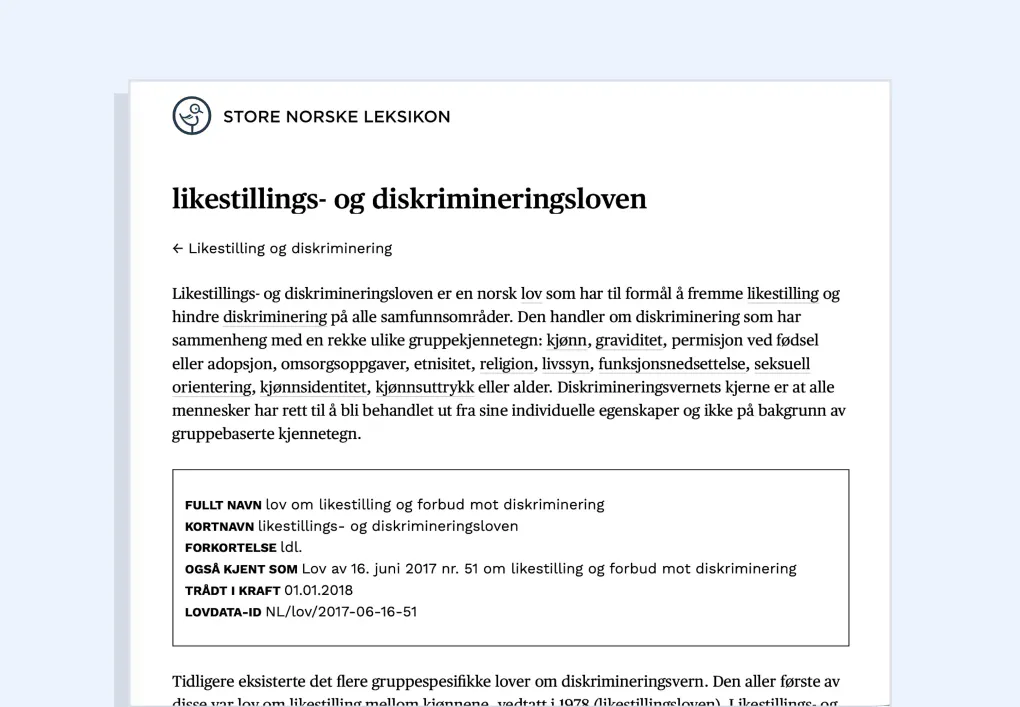
The Norwegian Equality and Anti-Discrimination Act (2017:51), or Likestillings- og diskrimineringsloven, is comprehensive legislation that aims to promote equality and prevent discrimination across all areas of society, including the workplace.
It was introduced in 2017 with the core aim of integrating several previously separate discrimination laws for different e.g. the Act on Equality between the Sexes had been in place since 1978 but was specific to gender discrimination only (not encompassing disabilities, religion, ethnicity, etc.)
The Act makes it illegal for employers to discriminate based on gender, pregnancy, parental leave, caregiving responsibilities, ethnicity, religion, disability, sexual orientation, gender identity, gender expression, age, or other essential characteristics.
Compliance with the Equality and Anti-Discrimination Act is monitored by Norway's Equality and Anti-Discrimination Ombudsman (Diskrimineringsombudsmannen - LDO) and the Discrimination Tribunal (Diskrimineringsnemnda).

How is pay transparency included in the Norwegian Equality and Anti-Discrimination Act?
The key requirements within the Equality and Discrimination Act on pay transparency and equal pay are as follows:
- Section 26 (Aktivitets- og redegjørelsesplikt or ARP): Requires public employers (all sizes) and private employers with 50+ employees to conduct biennial gender pay reviews, publish annual gender equality statements, and systematically work to identify and address discrimination risks through a four-step method. Private employers with 20-49 employees must comply if requested by employee representatives.
- Section 29: Employers must actively work to promote equality in hiring, pay, working conditions, promotion, skills development, and work-life balance.
- Section 32: Employees who suspect pay discrimination have the right to request written information from their employer about the pay level and pay-setting criteria for colleagues performing equal work. Information recipients must sign a confidentiality agreement.
- Section 34: Women and men in the same organisation must receive equal pay for the same work or work of equal value. Pay must be set in the same way, regardless of gender. Equal value is determined by considering the competence required, effort, responsibility, and working conditions.
The EU Pay Transparency Directive will introduce new requirements beyond current Norwegian law, including:
- Mandatory salary range disclosure prior to job interviews
- Proactive disclosure of pay-setting criteria and pay progression pathways to current employees
- Employee right to request gender pay gap information for comparable roles without needing to suspect discrimination (currently only available if discrimination is suspected under Section 32)
- Annual reminders to employees about their right to pay information
- Direct submission of gender pay gap reports to regulatory authorities (rather than inclusion in annual reports)
- Standardised gender pay gap reporting methodology aligned with EU requirements.
The upcoming EU Pay Transparency Directive (Likelonnsdirektivet)
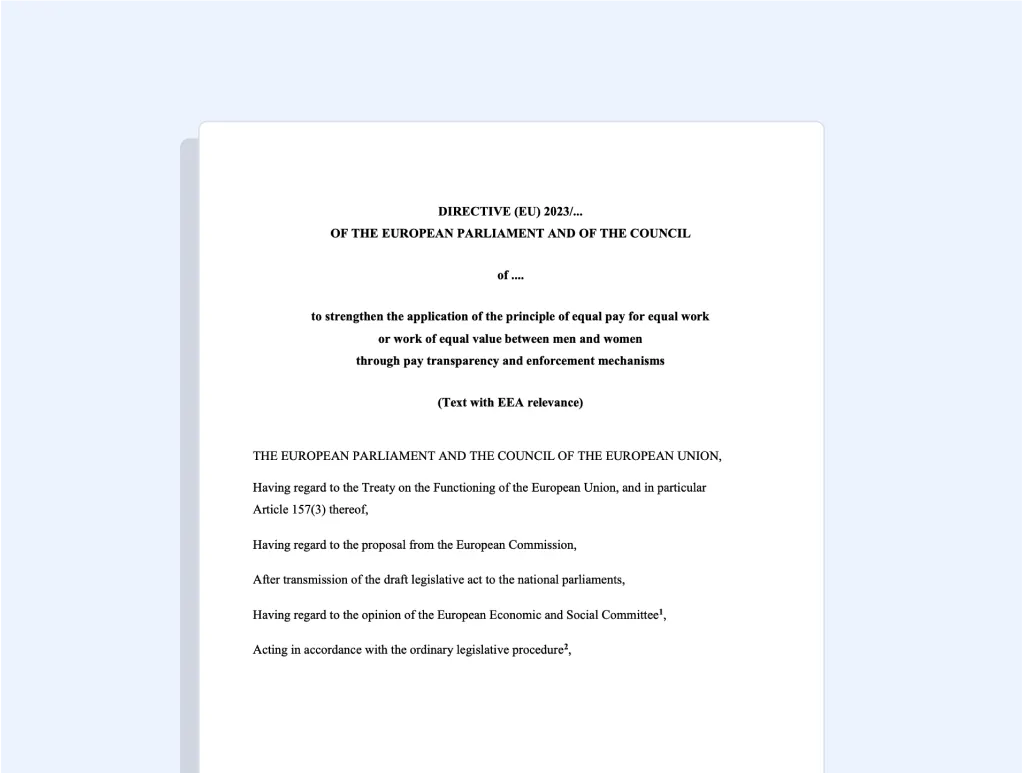
The EU Pay Transparency Directive is new legislation set by the European Council with the purpose of closing Europe's gender pay gap by increasing pay transparency amongst EU companies.
Although Norway is not an EU member state, it participates in the European Economic Area (EEA). The Directive has been deemed EEA-relevant, and the Norwegian government has committed to implementing it into national law.
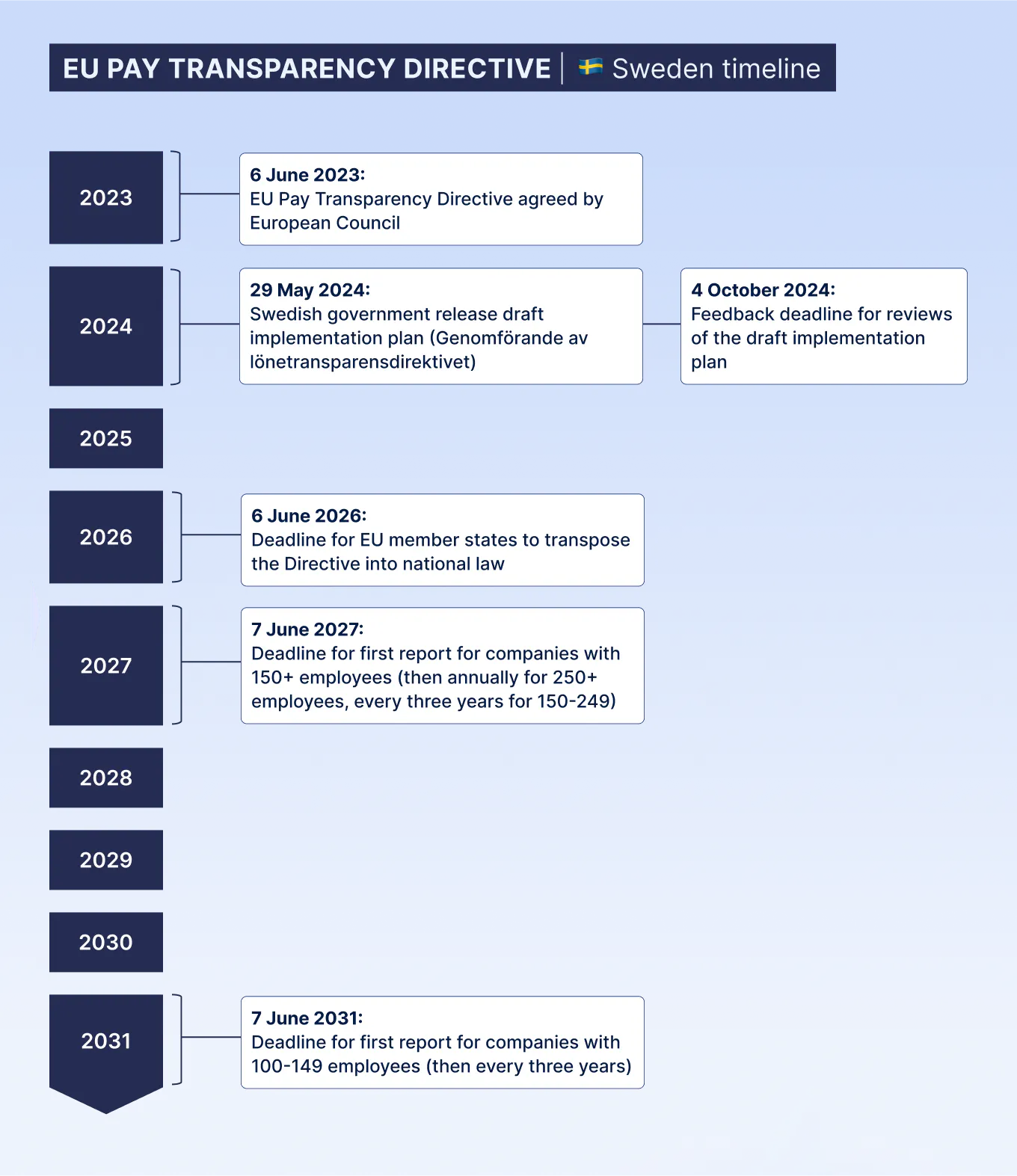
The Directive was officially adopted by the European Council in June 2023. EU member states have until 7 June 2026 to transpose it into their national laws. For Norway and other EEA countries, the timeline is less certain; the Directive must first be formally incorporated into the EEA Agreement, and then Norway must transpose it into domestic legislation.

How does the EU Pay Transparency Directive differ from Norway’s Equality and Anti-Discrimination Act?
The EU Pay Transparency Directive introduces significantly stricter pay transparency and gender pay gap reporting requirements than Norway's current law. Here are the key differences:
1. Employee understanding of pay and career progression
The Directive requires employers to make 'easily accessible' to employees the objective, gender-neutral criteria used for determining pay for each job level, and for progression between levels. This is new under the Directive (the current Norwegian law does not explicitly require this level of transparency).
2. Employee rights to pay information
Under the current Equality Act, employees can request information about colleagues' pay if they suspect discrimination. The Directive strengthens this by requiring employers to actively inform employees at least once per year of their right to request pay information for peers who perform equal work or work of equal value. This is a more proactive requirement than Norway's current law.
3. Job applicant rights to pay information
The Directive requires employers to disclose the salary range for all new roles to candidates before interviews. Norway's current law does not have this requirement. This is a significant change for Norwegian employers, particularly given the prevalence of the phrase "lønn etter avtale" (salary by agreement) in Norwegian job postings (this will no longer be acceptable).
4. Salary history ban
Employers are banned from asking candidates about their salary history during the hiring process. The current Norwegian Equality Act does not explicitly address this.
5. New gender pay gap reporting requirements
All employers with 100+ employees are required to submit detailed gender pay gap reports in a standardised format. The current Norwegian Equality Act requires pay reviews (biennial for private sector), but does not mandate submission to regulatory authorities or follow a standardised format.


Gender pay gap reporting: EU Pay Transparency Directive vs Equality and Anti-Discrimination Act
Current requirements (Equality and Anti-Discrimination Act):
- All private sector employers with 50+ employees must conduct a biennial gender pay review
- The review must be documented and included in the annual report or made available upon request
- There is no standardised format for the review
- There is no requirement to submit the review to a regulatory body
- Employers can decide their own methodology for analysing and addressing pay differences.
- The impact of parental leave on pay progression must be measured and reported.
New requirements (EU Pay Transparency Directive):
The following employers must complete gender pay gap reporting:
- Employers with 100+ employees must submit gender pay gap reports in a standardised format to the relevant regulatory body
- Employers with 250+ employees must report annually (starting 2027)
- Employers with 100-249 employees must report every three years (starting 2027 for those with 150-249 employees; 2031 for those with 100-149 employees)
The Gender pay gap must be calculated and reported as follows:
- Overall gender pay gap (mean and median)
- Gender pay gap for variable pay (mean and median)
- Proportion of men and women receiving variable pay
- Proportion of men and women in each pay quartile
- Gender pay gap for each 'category' of workers (groups performing equal work or work of equal value)
- Gender pay gap for variable pay for each 'category'.
Employees must be informed of the results for their employee category, and any gender pay gap over 5% must be justified with objective, gender-neutral criteria, or the employer must conduct a joint pay assessment with employee representatives.
Key difference: The EU directive introduces a standardised, mandatory reporting system with a regulatory approval process, whereas Norway's current law allows employers flexibility in methodology and does not require regulatory submission.
Norway's implementation of the EU Pay Transparency Directive
On 20 November 2025, Norway's Ministry of Culture and Equality confirmed that it has initiated work to implement the Directive.
Because Norway is not an EU member state, the implementation process looks a little different.
The Directive has been designated as "EEA-relevant," so it will be incorporated into the EEA agreement that Norway (along with Iceland and Liechtenstein, the other EEA EFTA members) follow.
However, the EU deadline of transposing the Directive into national law by 7 June 2026 does not apply to the EEA EFTA members – and so no official implementation deadline has been set for Norway.
Once the Directive is incorporated into the EEA Agreement, Norway will then have a transitional period to transpose it into national law. So far, the Ministry of Culture and Equality has outlined the following steps:
- EEA Agreement incorporation: The Directive must first be formally adopted into the EEA Agreement through the EFTA/EEA process – currently in progress.
- Assessment phase: Evaluate whether new legislation is needed or whether the Directive can be incorporated through amendments to existing laws
- Consultation paper: Draft a proposal and circulate it for public comment, involving employers, unions, and civil society
- Legislative proposal: Submit a final recommendation to the Storting (Norwegian Parliament)
- Parliamentary debate and adoption: Parliament reviews and votes on the proposal
- National law implementation: New legislation or amendments enter into force
This timeline is consistent with how Norway has previously integrated EU/EEA labour directives into domestic law.
What direction is Norway’s implementation of the EU Pay Transparency likely to take?
While the final form of Norwegian implementation is not yet known, there are several indicators of how Norway may proceed:
- Alignment with existing law: Norway's current Equality and Anti-Discrimination Act already requires many elements that the Directive mandates (pay equity analysis, equal pay for equal value, etc.). The implementation will likely focus on adding the new elements (salary ranges in job postings, standardised reporting format, salary history ban) while strengthening existing requirements.
- Learning from EU implementation: Sweden (the first EU member to transpose the Directive) has published draft implementation plans that go beyond the Directive's minimum requirements. Norway may adopt a similar approach, given its strong history on gender equality, similar labour market model, and existing framework through the Equality and Anti-Discrimination Act which already includes many of the Directive's core principles.
- Collective bargaining context: Norway's labour market is heavily shaped by collective bargaining agreements. The implementation may include guidance on how the Directive interacts with existing collective agreements and sectoral pay scales.
- Practical timeline: While no formal deadline has been set, employers should anticipate that implementation could occur within 12-24 months of the Directive being formally incorporated into the EEA Agreement. Early preparation now will be beneficial regardless.
Key differences between Norwegian law and the EU Pay Transparency Directive:
Requirement | Current Norwegian Law | EU Directive | Status in Norway |
|---|---|---|---|
Pay equality principle | Yes, Section 34 Equality Act | Yes, Article 4 | ✓ Already in place |
Gender pay review requirement | Biennial for 50+ employees | Standardised reporting for 100+ | Update needed |
Reporting to regulatory body | Not required | Required | NEW |
Standardised reporting format | No | Yes, specified in Directive | NEW |
Salary range for job candidates | Not required | Required before interview | NEW |
Salary history ban | Not explicit | Explicit ban | NEW |
Right to pay information | Yes, on request | Yes, plus annual reminder | Update needed |
Employee pay info disclosure | On request with confidentiality | Required if similar work | Update needed |
5% threshold with action requirement | Not specified | Yes, 5% gap = action required | NEW |
Burden of proof | Employee must show discrimination | Employer must disprove | NEW |
Norway's gender pay gap (lønnsgap): current status and context
Norway’s paradox - high gender equality ranking yet persistent pay gap - reflects the complexity of pay equity. Much of Norway's gender equality stems from strong legal protections, high female labour force participation, and access to parental leave. However, structural factors such as occupational segregation (women concentrated in lower-paid sectors) and part-time work patterns continue to drive the overall pay gap.
The EU Pay Transparency Directive's focus on standardised reporting and the 5% threshold mechanism will help Norwegian employers identify and address these deeper structural disparities, moving beyond what the current Equality Act captures.
What do Norwegian companies need to do to prepare for the EU Pay Transparency Directive (Likelonnsdirektivet)?
Whether or not your organisation is immediately subject to the EU Pay Transparency Directive, now is the time to begin preparing. The requirements are substantial, and the transition from the current flexible approach to standardised, mandatory reporting will require time and investment.
Here's the 4 key steps needed to get prepared:
1. Build your job levelling and pay framework
- Develop or formalise a documented job levelling framework that clearly defines competencies, experience, and responsibilities at each level
- Define defensible salary ranges for each role based on market benchmarking and internal equity.
2. Update recruitment practices
- Remove "lønn etter avtale" from job postings – you must disclose salary ranges or starting salaries
- Ban salary history questions from applications, interviews, and reference checks
- Train recruiters and hiring managers on new requirements.
3. Establish employee pay transparency processes
- Document your pay-setting criteria (compensation philosophy, benchmarking approach, how bands are set, how increases work)
- Establish annual notification process informing employees of their right to request peer pay information
- Create a process for responding to pay information requests within required timeframes.
4. Prepare for gender pay gap reporting
- Define employee categories based on equal work or work of equal value
- Set up calculations for mean and median gender pay gaps overall and by category
- Develop root cause analysis processes for gaps over 5%
- Prepare for joint pay assessments with employee representatives if gaps cannot be justified
- Engage employee representatives and unions early; ensure alignment with collective bargaining agreements.
The time to start preparing is now.
By the time the EU Pay Transparency Directive is formally incorporated into Norwegian law and implementation deadlines arrive, organisations that have already begun their preparation will be well-positioned to comply smoothly and realise the benefits of transparent, equitable pay practices.
We've put together an EUPTD checklist to help you work through these preparation steps for your company. Go to the checklist →