After several years of rapid change, compensation in European tech is showing signs of stability. Salaries, hiring, and promotions are levelling out – creating an opportunity for companies to plan more strategically.
But, amidst this stability, AI hiring is accelerating, workforce structures are evolving, and upcoming EU pay transparency rules are set to redefine how companies approach pay equity and communication in 2026.
Nico Kaml (Account Executive at Ravio) was joined by Karam Deo (Senior Global Reward Analyst at GoCardless), Chloe Paramatti (People Lead at EQT Group) and Evert Kraav (Senior Manager, Compensation at Bolt and Co-Founder of Cohorts) as they discussed both the stability and the transformation across the European tech landscape, sharing data-driven insights and practical takeaways for People and Reward leaders navigating the year ahead.
They covered:
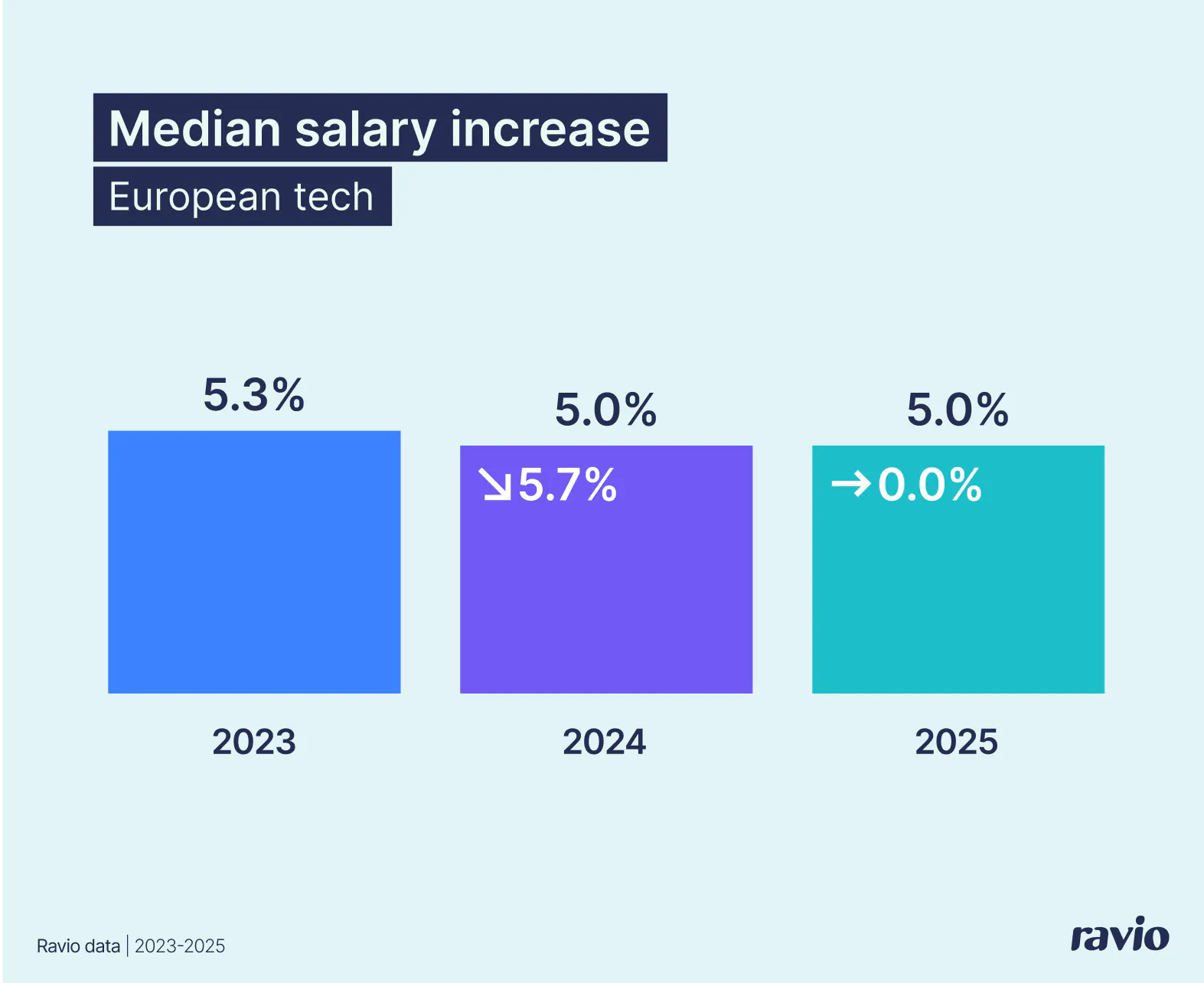
- Compensation stability: 5% pay increases, steady attrition, and what this means for your 2026 planning
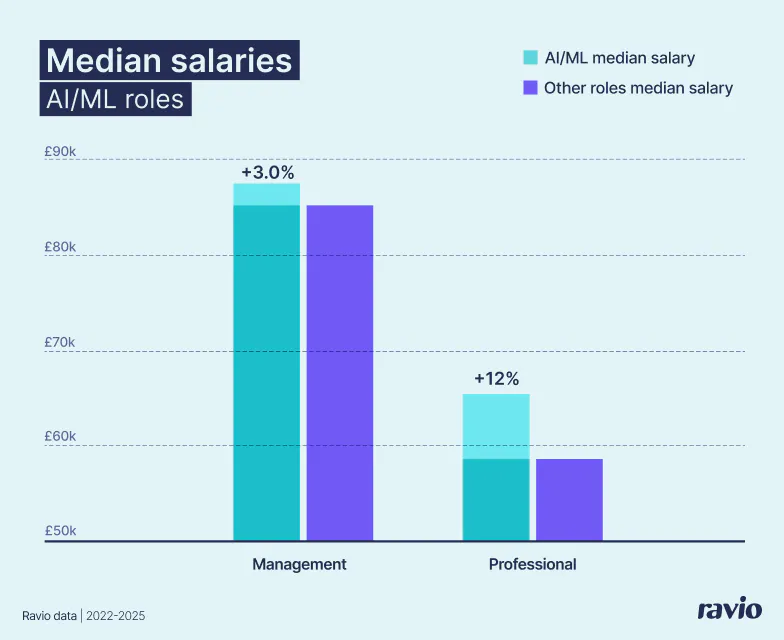
- The AI hiring surge: 88% growth, 12-17% premiums, and how to compete for scarce new talent
- Pay equity progress: persistent pay gaps and preparing for EU regulatory deadlines
Key takeaways from the webinar
If you're more of a reader than a watcher, here's a few of the most interesting insights from Nico, Chloe, Karam and Evert on 2026 compensation trends
Key takeaway 1: Market stability is deceptive – use this time wisely
What looks like compensation stability (5% average salary increases, steady hiring rates) may actually be a waiting game. Employees may be staying put due to market uncertainty and limited opportunities rather than genuine satisfaction, while companies face economic pressures that restrict salary growth.
This creates a false sense of calm ahead of future market shifts (especially once AI-driven disruption transforms the talent market) – we may see significant pent-up talent movement once conditions improve.
Before assuming stability, consider if you are prepared for sudden talent movement when markets do start shifting again – identify which roles are crucial to retain, investigate engagement beyond compensation to prevent future attrition, and ensure you have the infrastructure to respond quickly to market changes.

Key takeaway 2: AI premiums require intentionality, not blanket approaches
AI roles are showing significant pay premiums (3-12%, depending on seniority level), but competing blindly creates internal equity issues and unsustainable cost structures, especially with the EU Pay Transparency Directive taking effect in 2026.
Not all AI roles warrant the same premium. Companies building foundational models operate in a different talent market than companies adding AI features or developing AI-enabled products – which is why we’re seeing some crazy market premiums from companies like OpenAI.
The key here is to clearly identify which category you belong to and understand the actual business impact of each role before increasing pay.

💡 Practical insight:
As Chloe emphasised, if specific AI skills are mission-critical and delays risk customer loss or missed market windows, pay the premium but do it intentionally.
Start hiring conversations early to clarify true needs, target the 75th-90th percentile for genuinely critical roles, keep others at the median, and remember that European equity packages are now competitive for high-impact talent.
Key takeaway 3: EU Pay Transparency requires infrastructure first, not just compliance
With the EU Pay Transparency Directive deadline fast approaching, most companies lack the foundational structure needed for compliance. The directive aims to prevent gender bias-driven pay gaps, making it critical to have defensible, objective reasoning for all compensation decisions.
Companies that wait until reporting requirements hit will scramble to explain gaps they can't even identify yet. The solution isn't just better analytics. It's about building a proper structure now that prevents pay equity issues from forming in the first place.
Essential infrastructure to build now includes levelling frameworks that define clear progression criteria, job catalogues that avoid overly creative titles obscuring comparable roles, salary bands with objective positioning criteria, and data systems that can identify pay gaps by equal value work. You'll also need a framework for when to use flexible compensation like bonuses and equity versus permanent base salary increases.
Key takeaway 4: Manager enablement and communication are non-negotiable
Even perfect compensation frameworks fail without clear communication. Compensation strategies are familiar to Reward teams but foreign to most employees and managers, yet managers have the difficult conversations.
Rolling out transparency on everything at once (compphilosophy, methodology, salary ranges) only overwhelms people. Early and consistent communication builds understanding and trust, even if not everyone agrees with every decision.
💡 Practical application:
Begin manager training on compensation conversations now, even if frameworks aren't perfect. Create simple guides explaining your philosophy and decision-making process.
Remember that understanding the why matters as much as the decisions themselves.
As Evert said: test everything with AI first – if your frameworks don't hold up to AI scrutiny, they won't satisfy your workforce.